
Torsion Spring Lifespan in Florida
Torsion springs are rated in cycles, not calendar years alone. Florida heat, humidity, and salt air change how soon cycle life is consumed in real garages.
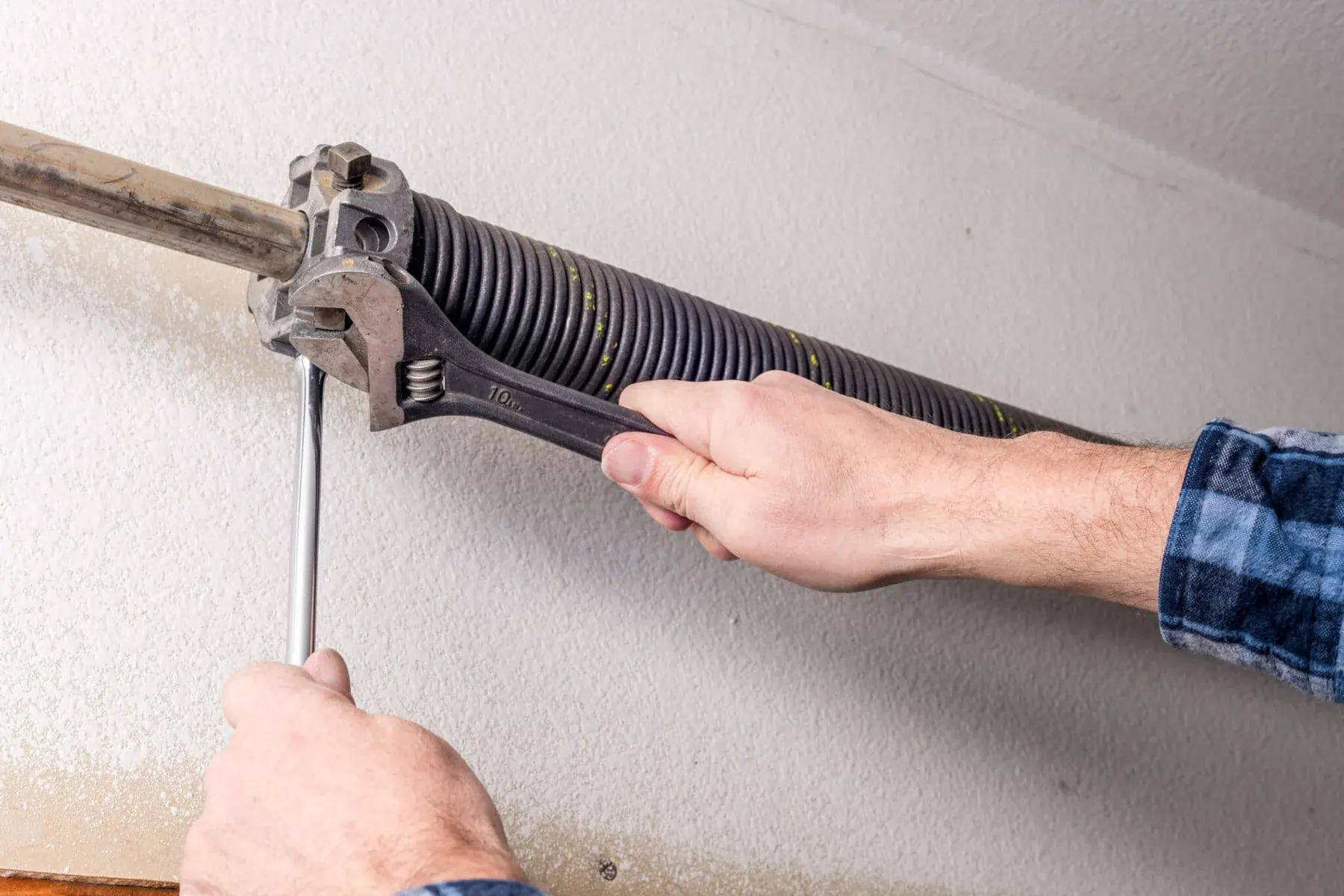
What “cycle life” means on a torsion spring
A cycle is one open and one close. Standard residential springs are often designed around tens of thousands of cycles; high-cycle designs are built for more frequent daily use. Households that open the door for every errand consume cycles sooner than homes that use the door twice a day.
Calendar age still matters because corrosion and heat fatigue accumulate even when cycle counts look moderate. Florida garages combine both pressures.
Manufacturers publish cycle ratings under controlled assumptions. Real garages add heat soak, irregular lubrication, and doors that are slightly out of balance for months. Those conditions consume rated cycle life sooner than a brochure implies.
Counting approximate daily opens, school runs, deliveries, gym trips, helps you understand why a neighbor’s spring lasted longer than yours.
How Southwest Florida conditions shorten service life
Heat expands and contracts metal; coastal humidity and salt accelerate rust on spring wire, cones, and related hardware. A spring that would look acceptable inland can show pitting sooner near the Gulf.
We often see springs that “still lift” but show surface corrosion that warrants proactive replacement during a related repair. Read humidity and rust for the broader corrosion picture.
Salt air does not only discolor the coil; it pits the surface and creates stress risers. Once pitting is advanced, waiting for a dramatic bang is optional risk. Proactive replacement during a related repair can be the calmer choice.
Garage doors that face the Gulf or sit without climate buffering see this pattern earlier. Inland Sarasota County homes still deal with humidity; coastal addresses stack salt on top.
Signs a spring is near the end of its useful life
A loud bang and a suddenly heavy door usually mean a spring has broken. Before that, watch for uneven travel, a door that is harder to lift manually, gaps in coil spacing, visible rust, or an opener that strains and sounds labored.
Never try to wind or unwind torsion springs yourself. Stored energy can cause serious injury. Professional service is the safe path, see DIY repair risks.
Uneven coil gaps, rust dust under the torsion bar, and a door that wants to fall closed or slam open are mechanical essays about spring health. Listen to the opener as well: a strained motor is often reporting spring fatigue.
If you must leave the house before service arrives, keep the door down if it is safe to do so and disconnect automatic opener use so nobody tries to lift a broken-spring door with the motor.
Why springs are often replaced as a matched set
On dual-spring doors, when one breaks the other has lived the same cycle life. Replacing only the broken spring can leave you with a second failure soon after. We explain that tradeoff on the written estimate so you can choose knowingly.
Wire size and wind direction must match the door weight. Incorrect springs create balance problems that damage cables, drums, and openers. Details live on torsion spring repairs.
On single-spring doors, there is no partner spring to share remaining life, the break is binary. On dual-spring doors, the surviving spring has been doing shared work and is not “like new” simply because it has not snapped yet.
We explain matched-set recommendations on the estimate so you can weigh a second spring’s hardware against the likelihood of another repair visit.
When high-cycle springs make sense
Busy households, home-based businesses with frequent bay use, and light commercial openings may justify higher cycle ratings. The upgrade costs more in hardware but can reduce how often you repeat spring service.
Explore high-cycle spring systems and high-cycle upgrades if your door works like a revolving door.
Home-based bakeries, detail shops, and busy families sometimes cycle a door more like light commercial equipment. High-cycle wire is the honest hardware response when standard springs keep calendaring early failures.
Cycle upgrades still require correct weight matching. Higher cycle life is not a substitute for wrong wire diameter.
Extending life with balance checks and tune-ups
Lubrication of the spring (where appropriate), roller and hinge care, and confirming the door is balanced reduces side loads that chew through cycles early. An opener should not be the primary lifting force for a poorly balanced door.
Schedule a visit via book now or call (954) 232-0054. Quick Springs is open 24 hours when a spring fails and the door must be secured.
Between failures, a tune-up that restores balance and eases roller drag helps springs spend their cycles on lifting, not fighting friction.
Document the install date of new springs on your calendar. Future you will thank present you when planning the next inspection window.
Questions about this topic
Our Professional Service & Repair Standards
Our service guides cover torsion spring repair, opener repair, off-track recovery, cable replacement, tune-ups, and installation. Our service-area guide lists the communities we support throughout Southwest Florida. If you would like to read public reviews, please visit our Google Maps profile linked in the footer.
During a visit we document findings, then you choose the work with zero high-pressure sales tactics. After approved repairs we test the door through full cycles. If a part is not on the truck, we explain timing clearly. We follow the same process across Sarasota County and nearby Southwest Florida communities.
Safety first: keep people and pets clear of a moving door. Do not place bricks on remotes. If the door is off track, stop using the opener. If a cable is hanging, leave the door down if it is already closed. These habits prevent extra panel damage while you wait for a technician.
Common questions from property owners include how long a service visit takes, whether we service specific brands, and how our written estimates work. Service duration depends on site access and the specific repair needed. We service all major residential and commercial overhead door systems. Transparent estimates are provided directly after diagnosis, taking into account door weight, cycle ratings, and local environmental wear.
Helpful resources: use our request form to schedule service, view our contact page for shop location and hours, read about our team, or browse our blog guides. An educational guide never replaces an on-site diagnosis when the door is unsafe or under tension.
Garage door issues are much easier to diagnose when the entire door is evaluated as a unified system. Springs carry the counterbalance weight, cables and drums ensure level lifting, rollers and tracks guide smooth panel travel, and sensors and openers function reliably only when mechanical balance is restored. Quick Springs Garage Door Repair begins every service visit with a comprehensive inspection to ensure the true root cause is addressed.
Florida humidity, salt air, and afternoon storms change how hardware ages. Lubricant dries. Fasteners rust. Photo-eyes get dirty. A door that slams, reverses, or sits heavy is sending a mechanical signal, not a random glitch. We explain those signals in plain language before anyone approves parts.
When you request service, share the ZIP, whether the door is stuck open or closed, and any recent storm, power outage, or opener change. Gate codes and HOA notes help. We are licensed and insured, open 24 hours, and we provide a written estimate after diagnosis. Call (954) 232-0054 or use the request form.
Residential garage doors throughout Sarasota and surrounding communities often experience torsion spring failure over time. A loud bang accompanied by a door that will not lift manually signals a broken spring; never attempt to wind or replace springs without proper training and equipment. Commercial doors typically wear from heavy cycle volume, leading to flattened rollers, cable fray, and operator strain. In all cases, our technicians conduct complete post-repair safety testing including balance, travel limits, and auto-reverse functions.
Tune-ups catch dry rollers, loose track bolts, and early cable wear before they cause unexpected operational failures. Installation is discussed only when panels, rust-through, or repeated structural repairs make replacement the safer path. We do not invent awards or publish fake review counts. Our local shop is located at 2517 Sota St, Sarasota, FL 34240.
Opener motors that hum without lifting usually mean the door is too heavy because a spring lost tension. Replacing the opener first often wastes money. Off-track doors after impact need track, roller, and cable checks together. Sensor issues in bright sun are often alignment and dirt, not a new motor.
Property managers can list multiple openings on one request. Seasonal residents should mention months of idle time. After a storm, say whether the door still moves. Email [email protected] if you need to send photos of cables, springs, or the opener rail. Photos never replace an on-site look, but they help us plan.
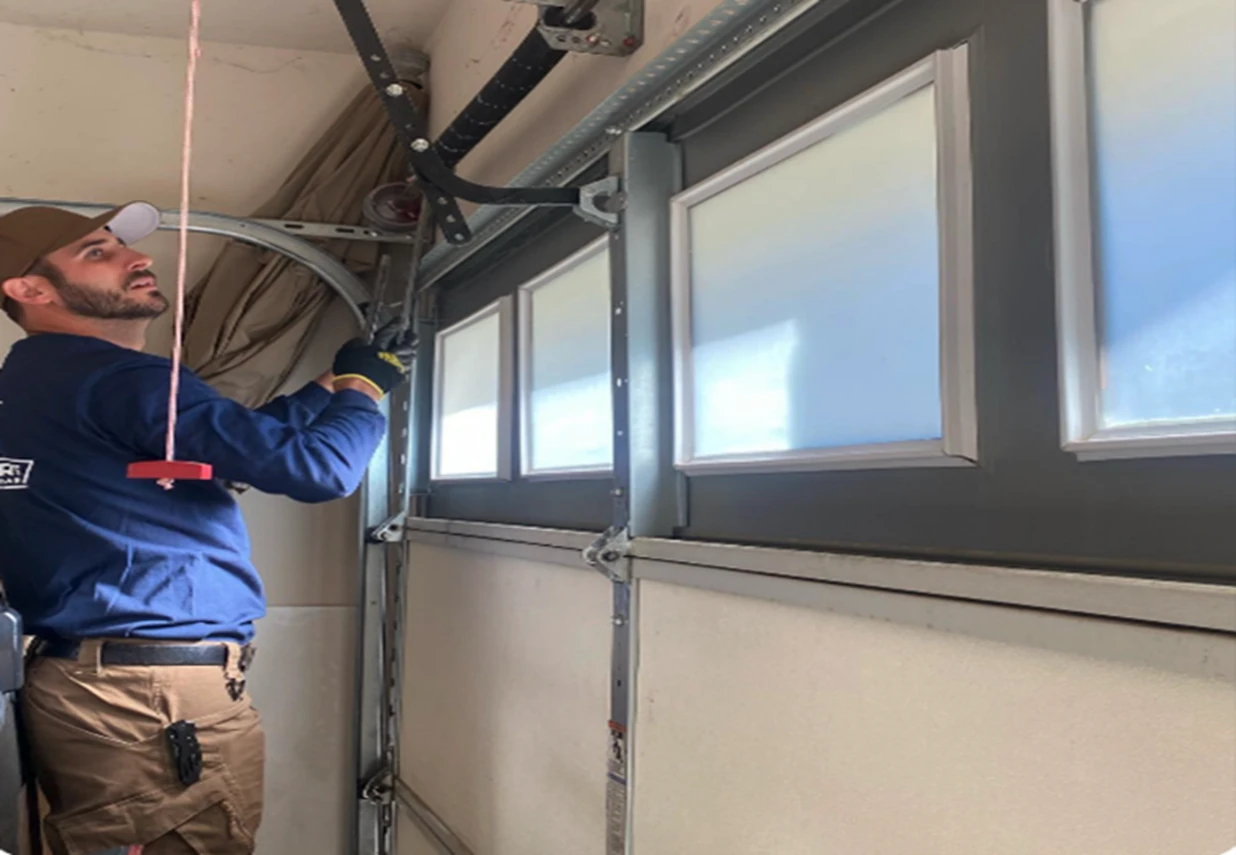
System checks on every visit
These six checks ensure every service visit addresses the underlying mechanics rather than just swapping individual parts.
Springs
Torsion springs lose cycles. A bang or a heavy door needs professional spring service, never DIY winding.
Cables
Frayed cables or a cable off the drum pull a door crooked. We inspect both sides with spring work.
Tracks
Impact and loose brackets bend tracks until the door binds. Forcing travel makes it worse.
Openers
Motors that hum without lifting often mean a balance problem, not only a failed gear.
Sensors
Misaligned photo-eyes reverse on close. We clean, align, and test after track work.
Maintenance
Tune-ups catch dry rollers and loose hardware before they become a stuck-door call.
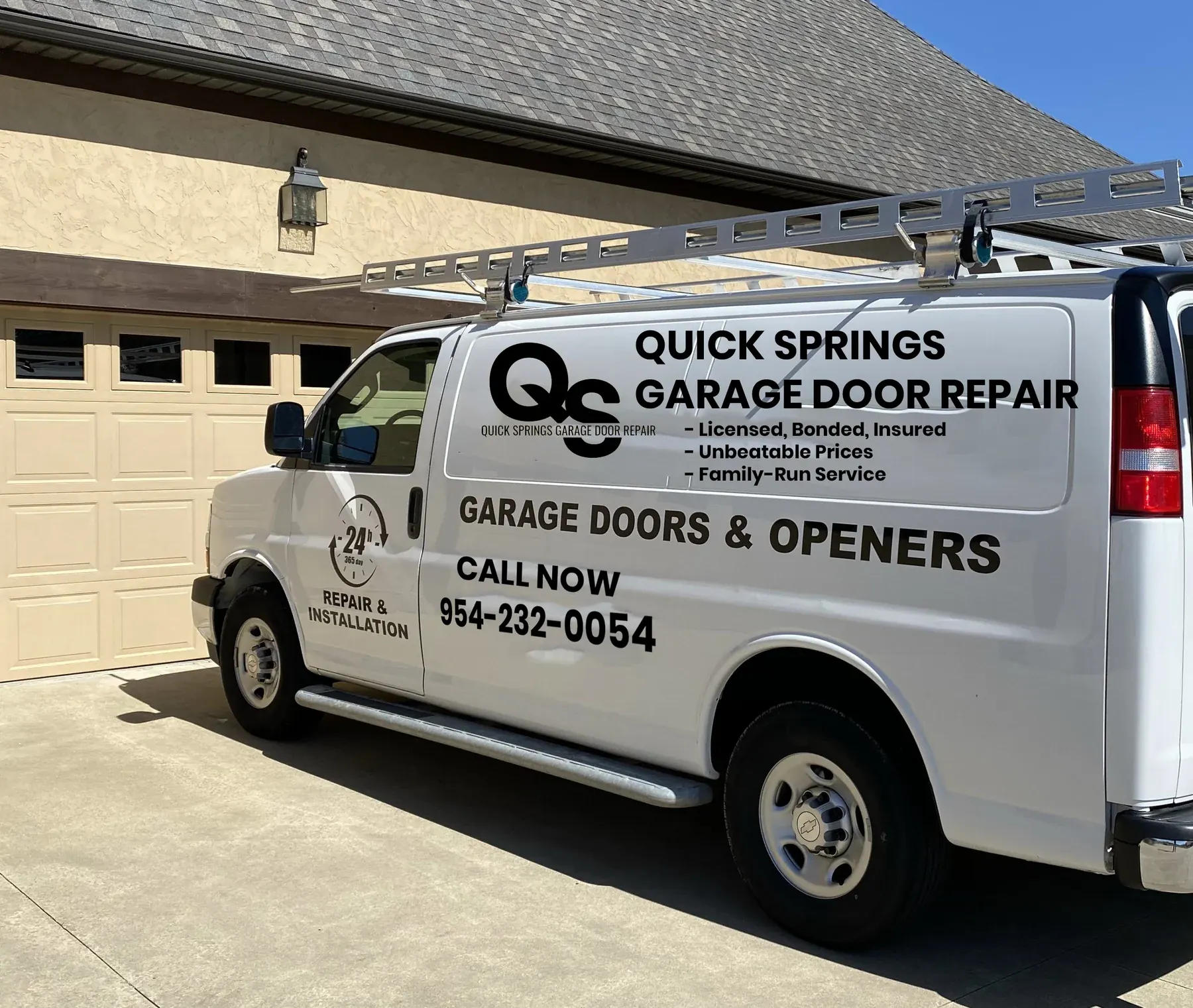
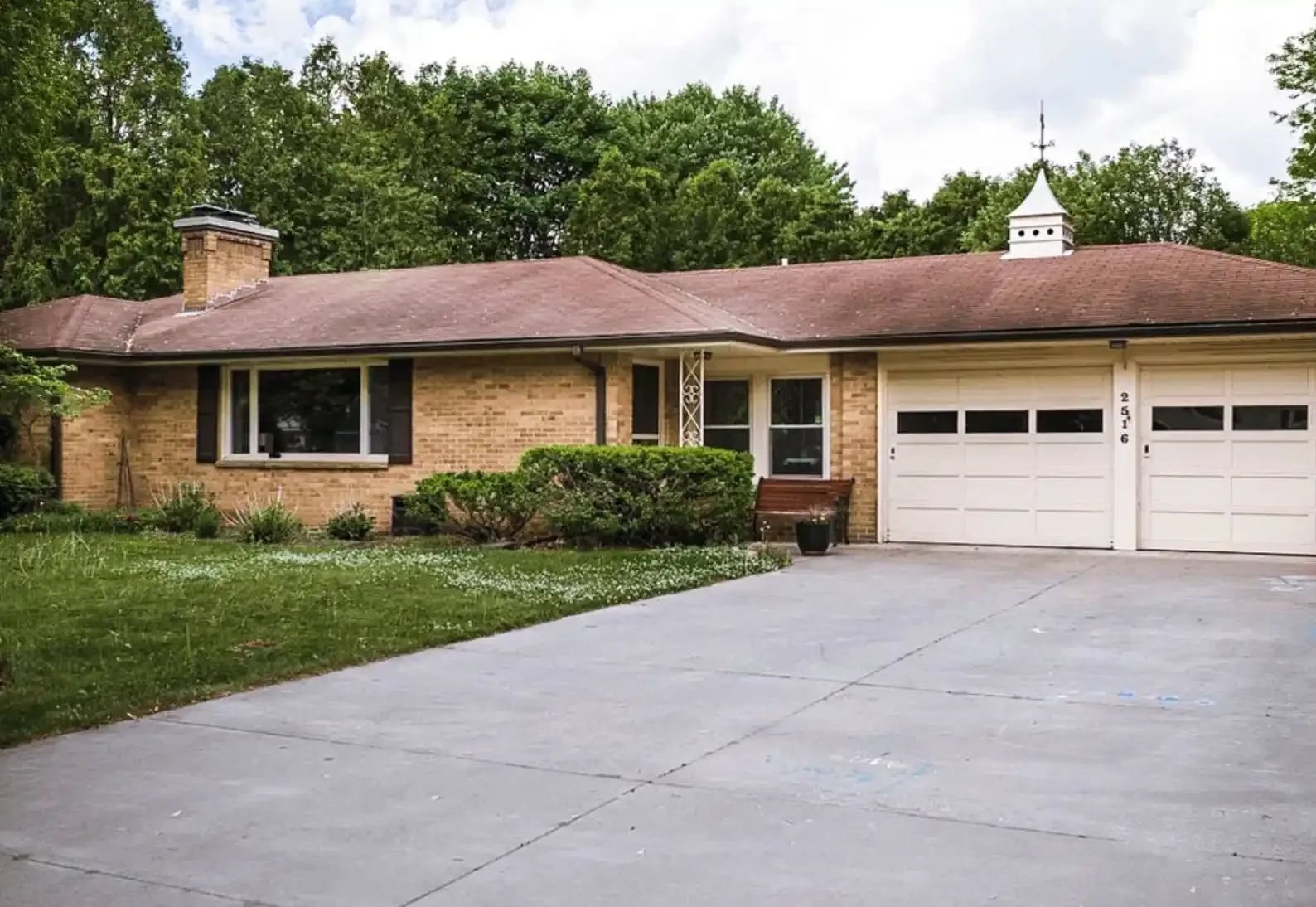
Photos from garage door work
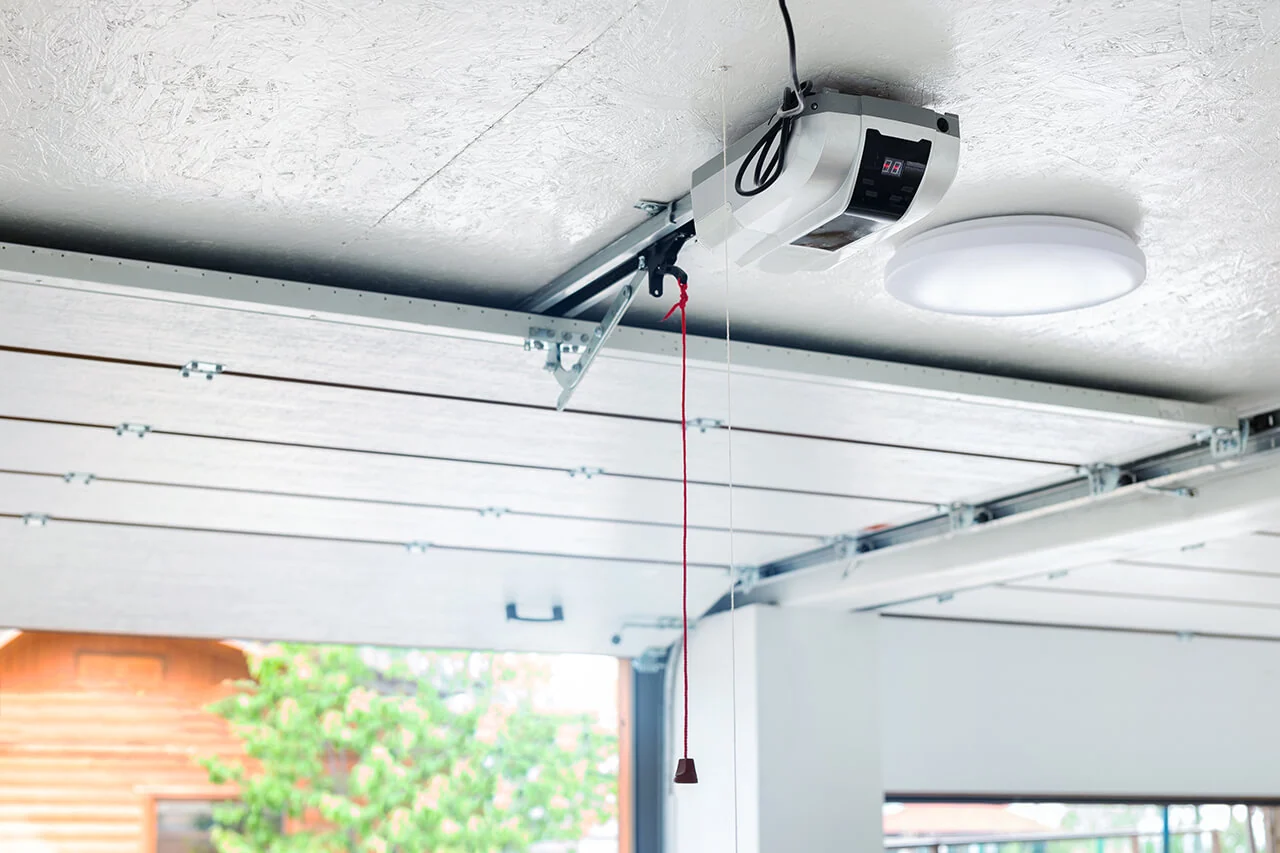
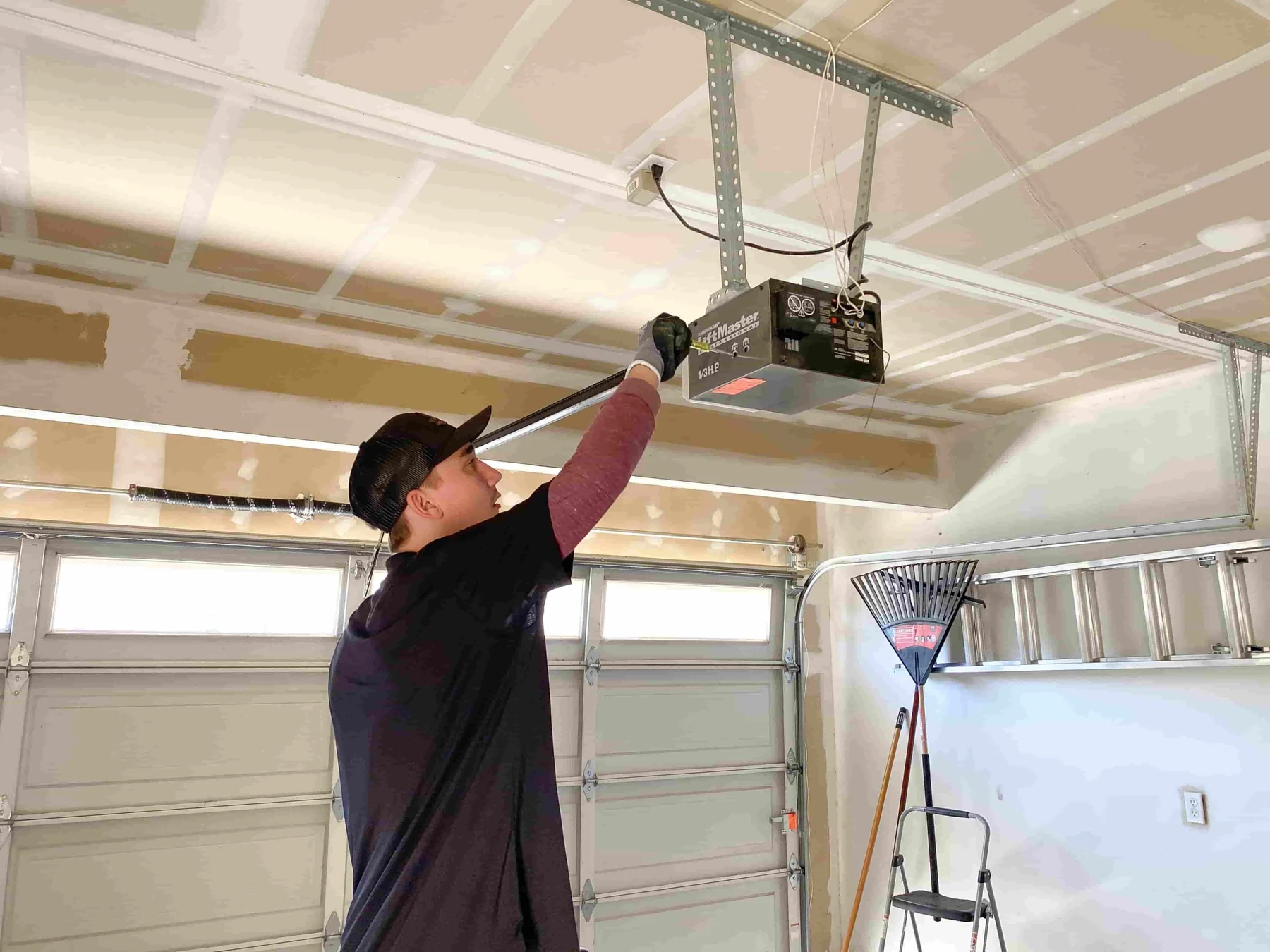
Representative service photos. Your door may need a different mix of springs, cables, tracks, or opener work after inspection.
What a service visit looks like
Request with ZIP
Call (954) 232-0054 or use the form. Mention symptoms and whether the door still moves.
Inspect the system
Springs, cables, drums, rollers, tracks, photo-eyes, and the opener are checked together.
Written estimate
You see findings and options before repair work begins. No pressure to guess parts over the phone.
Repair and test
Approved work is completed, then we test balance, travel, and auto-reverse.