High-Cycle Spring Upgrades
Upgrade from standard 10,000-cycle springs to 25,000–50,000 cycle high-life wire. Engineered with larger wire diameters and extended coil lengths to deliver 2.5x to 5x the operating lifespan.
High-cycle upgrade options →
When a garage door torsion spring breaks, the mechanical heart of your overhead door system ceases to function. Many homeowners assume the electric motor lifts the door; in reality, the electric operator only provides directional guidance, while the tightly wound overhead torsion springs provide the essential counterbalance torque required to safely lift and balance door weight. Manufactured from oil-tempered or galvanized spring steel wire, these springs store substantial mechanical torque. When metal fatigue fractures the coil—typically accompanied by an explosive bang—the door curtain becomes unsupported dead weight, frequently trapping vehicles inside and rendering the opening immobile.
At Quick Springs Garage Door Repair, torsion spring engineering is our foundational specialty. We do not guess at spring sizes or install generic contractor-grade springs that wear out in a few short years. Our trained technicians measure your door's exact physical weight, panel height, track radius, and drum diameter to calculate the precise wire gauge, inner diameter, and coil length needed for proper counterbalance. We install matched pairs of high-cycle springs, service center bearing supports, and achieve smooth, effortless manual balance.
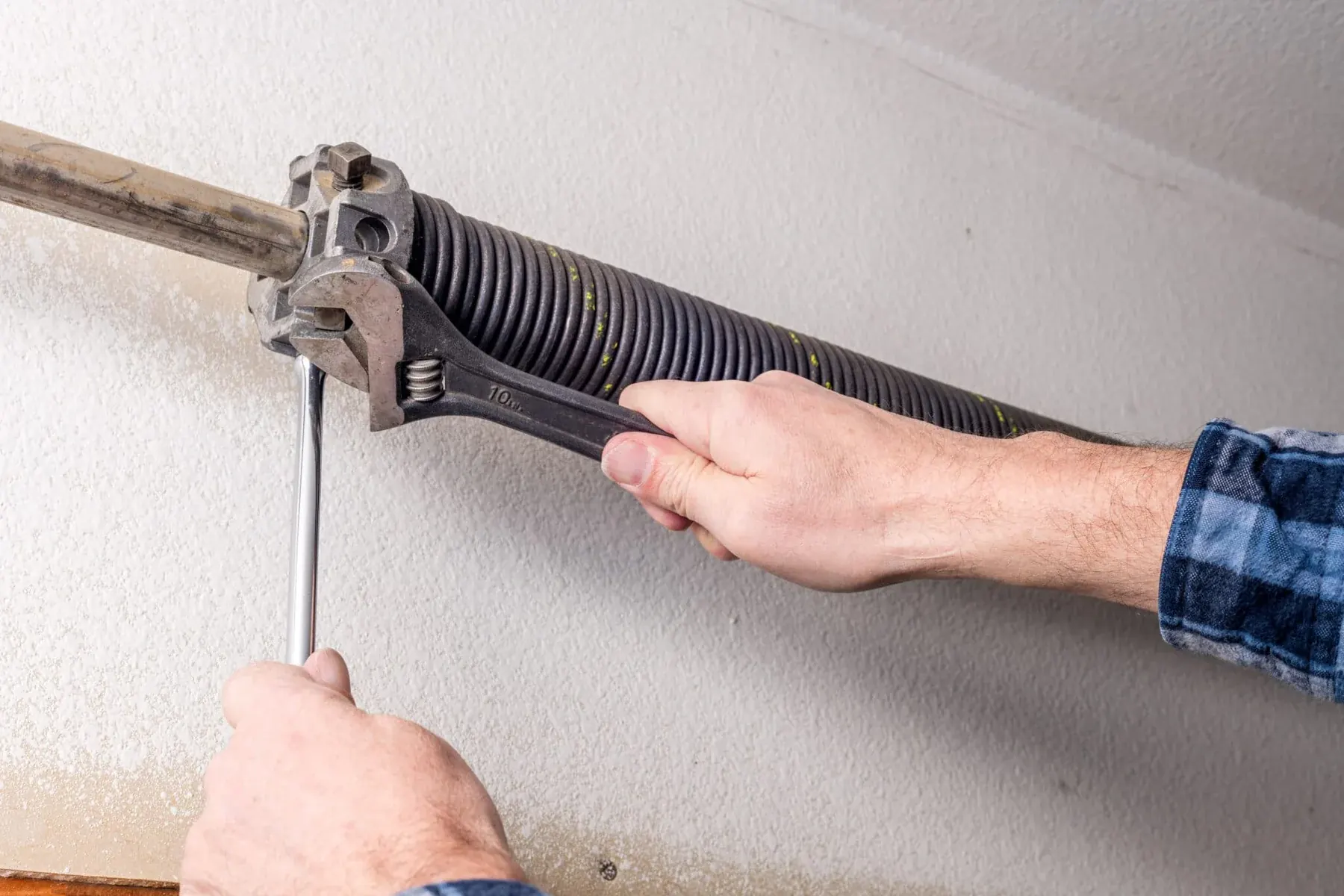
An overhead garage door system relies on rotational torsional energy governed by Hooke's Law. When the door is closed, the torsion springs mounted on the steel shaft above the opening are wound tightly under immense torque. As the door raises, the springs unwind, transferring their stored rotational force through the shaft to the aluminum cable drums, which wind the lift cables and hoist the 150 to 350-pound door curtain. When calibrated correctly, the torque output of the springs precisely matches the changing gravitational pull of the door panels across the horizontal and vertical tracks.
Every complete opening and closing sequence constitutes one mechanical 'cycle.' Steel wire has a finite fatigue threshold. Standard builder-grade springs are rated for approximately 10,000 cycles—equivalent to roughly 6 to 8 years of normal family use. Each time the door moves, microscopic crystalline dislocations migrate through the steel lattice. Over thousands of cycles, these dislocations coalesce into micro-cracks. Eventually, the remaining cross-sectional area of the wire cannot sustain the torsional stress, and the spring shears instantaneously across a coil gap.
Continuing to operate a garage door after a spring has snapped will severely damage the electric opener. The opener motor is engineered to push and pull a balanced door; forcing it to lift 200+ pounds of uncounterbalanced steel will strip internal nylon drive gears, snap drive belts, or burn out the electric motor windings. For key safety steps, consult our guide on what to do first when a garage door spring breaks.
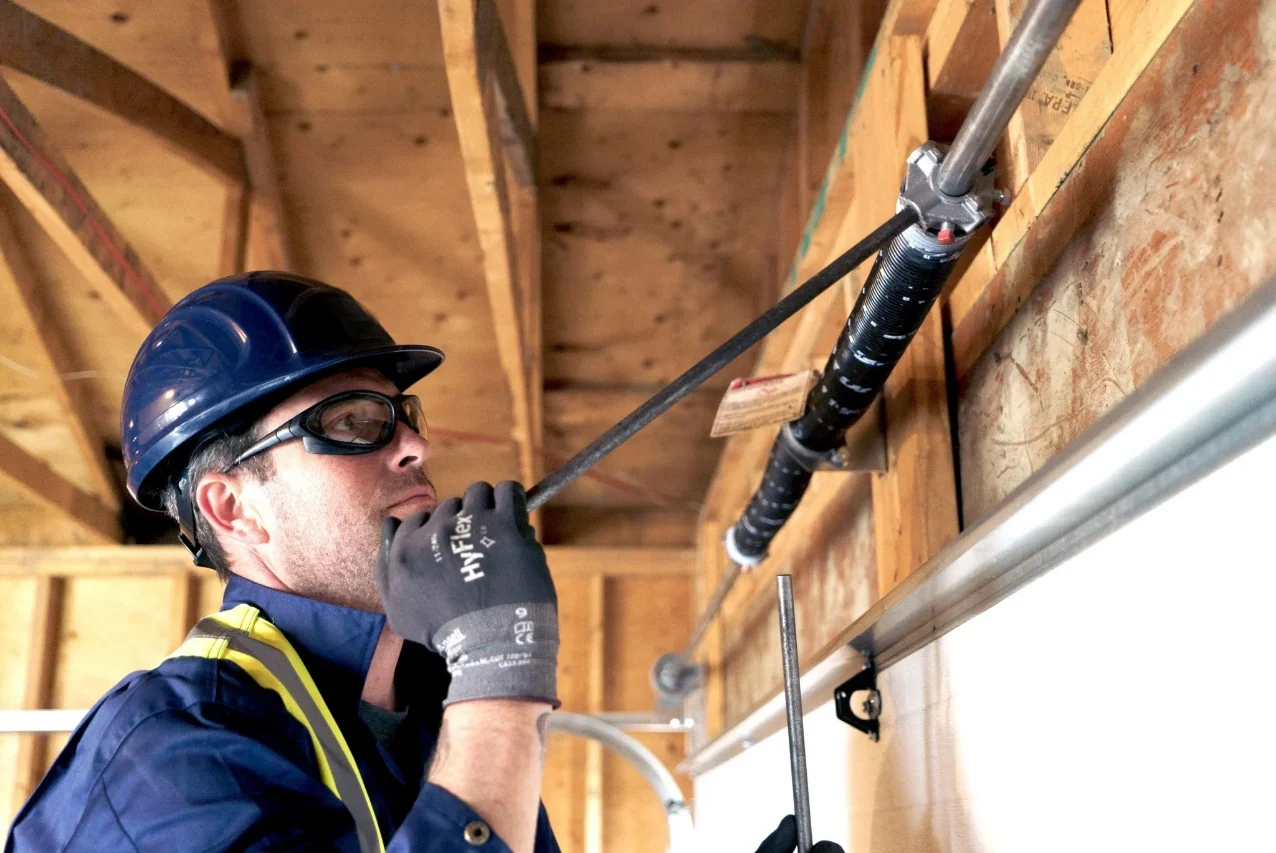
In Southwest Florida, environmental conditions dramatically shorten spring longevity. High ambient humidity combined with airborne salt vapor from Sarasota Bay and the Gulf creates an aggressive electrolyte on untreated steel. Standard oil-tempered springs are coated only with a light petroleum film during manufacturing. Within months of exposure to Florida's humid climate, this oil evaporates, leaving raw carbon steel vulnerable to oxidation.
As rust forms between tightly packed spring coils, friction multiplies during winding and unwinding. Pitting corrosion creates microscopic notches that act as localized stress risers, causing springs to break prematurely. Furthermore, unconditioned Florida garages experience intense seasonal heat and sustained humidity, accelerating surface oxidation and fatigue on untreated carbon steel.
Quick Springs Garage combats these regional failure points by offering premium hot-dipped galvanized torsion springs and specialized polymer coatings that seal the carbon steel core from moisture and salt air. We also install heavy-duty flanged center support bearings that eliminate shaft deflection and reduce rotational friction. To understand how coastal humidity affects your entire system, read our guide on Florida humidity and garage door rust.
From high-cycle spring conversions to center-bearing rebuilds, our solutions are engineered for long-term reliability.
Upgrade from standard 10,000-cycle springs to 25,000–50,000 cycle high-life wire. Engineered with larger wire diameters and extended coil lengths to deliver 2.5x to 5x the operating lifespan.
High-cycle upgrade options →When two springs are installed on a double-car door, both experience identical cycle fatigue. We always replace springs in matched pairs to ensure balanced torque and prevent asymmetric track binding.
Double spring care protocols →Torsion springs store lethal kinetic energy. Attempting to adjust winding cones with screwdrivers or makeshift bars causes severe injuries. Our trained technicians utilize precision winding equipment.
Risks of DIY spring repairs →Heavy impact-rated hurricane doors and commercial insulated bays require specialized high-IPPT spring configurations. We engineer custom duplex spring systems for oversized openings.
Commercial spring service →Replace outdated, dangerous side-mounted extension springs with modern, centrally mounted overhead torsion springs for smoother travel, quieter operation, and enhanced family safety.
Extension vs torsion safety →A spring replacement is incomplete without inspecting the center support bearing and end bearing plates. We replace worn, wobbly bearings to prevent shaft binding and motor strain.
Rebalancing service details →A rigorous multi-point safety procedure executed on every residential and commercial spring replacement.
We secure the door curtain using heavy-duty C-clamps locked directly above the bottom rollers to prevent unintended door drops. If one spring is still intact, our technician inserts hardened steel winding bars into the winding cone to systematically unwind and neutralize all stored rotational torque before loosening any set screws.
We do not guess at spring size. Using digital micrometers, we measure wire diameter across 20 active coils, inner diameter (1.75" or 2.0"), and relaxed coil length. We weigh the door with an analog scale to calculate exact Inch-Pounds Per Turn (IPPT), ensuring replacement springs match your door's exact mass.
We disassemble the torsion shaft, inspect end-bearing plates and center bushings, and slide on new high-cycle matched springs with heavy-duty cast iron winding cones. We inspect the aluminum cable drums, re-anchor aircraft lift cables, and secure stationary cones to the center spring pad.
Using standardized professional winding bars, we wind the springs to exact manufacturer turn counts. We reconnect the counterbalance cables, level the door across the concrete threshold, disconnect the opener, and verify that the door can be raised and lowered smoothly with minimal manual effort before reconnecting the motor.
Compare wire durability, cycle ratings, and corrosion resistance to choose the right spring configuration for your home.
| Feature | Standard Builder Grade | Quick Springs High-Cycle | Quick Springs Coastal Marine Grade |
|---|---|---|---|
| Cycle Life Rating | 10,000 Cycles (5–7 Years at 4 cycles/day) | 25,000 to 30,000 Cycles (12–18 Years) | 50,000+ Cycles (18+ Years) |
| Wire Finish | Standard Oil-Tempered (Bare Steel) | Powder-Coated Clean Finish | Hot-Dipped Galvanized High-Tensile Wire |
| Corrosion Resistance | Low — Rusts prematurely in Florida humidity | High — Polymer barrier blocks moisture | Maximum — Resists direct coastal salt-fog exposure |
| Winding Cones | Stamped aluminum or economy zinc | Heavy-duty cast ductile iron | Cast iron with corrosion-resistant set screws |
| Recommended Application | Low-use guest garages, rental turnovers | Active Sarasota family homes (4+ cycles/day) | Barrier islands (Siesta Key, Lido, Longboat Key) |
A garage door torsion spring never works in a vacuum. It is the powerhouse of a tightly synchronized mechanical network that includes the steel torsion tube, end bearing plates, aluminum cable drums, and high-tensile aircraft lift cables. When a spring breaks, the sudden shock load frequently causes the lift cables to snap, stretch, or unspool from the drum grooves. Installing new springs without synchronizing the cable drums will leave the door cocked diagonally, causing roller binding.
Similarly, worn center support bearings or dry end bearings increase shaft friction, forcing the new springs to work harder and creating grinding metallic noises. During every spring service, Quick Springs inspects and lubricates every bearing on the shaft. If your vertical tracks were knocked out of alignment during the spring failure, our off-track door recovery technicians restore plumbness and track spacing.
Once the mechanical counterbalance is restored, we reconnect and recalibrate your electric garage door opener. We adjust travel limits, re-set downforce sensitivity, and test safety reverse systems to ensure your motor operates without strain, extending the operational life of your entire automated system.
Photographic documentation of recent high-cycle spring rebuilds and balance calibrations.
Removed broken builder-grade spring and installed matched high-cycle powder-coated springs with new nylon-sealed end bearings.
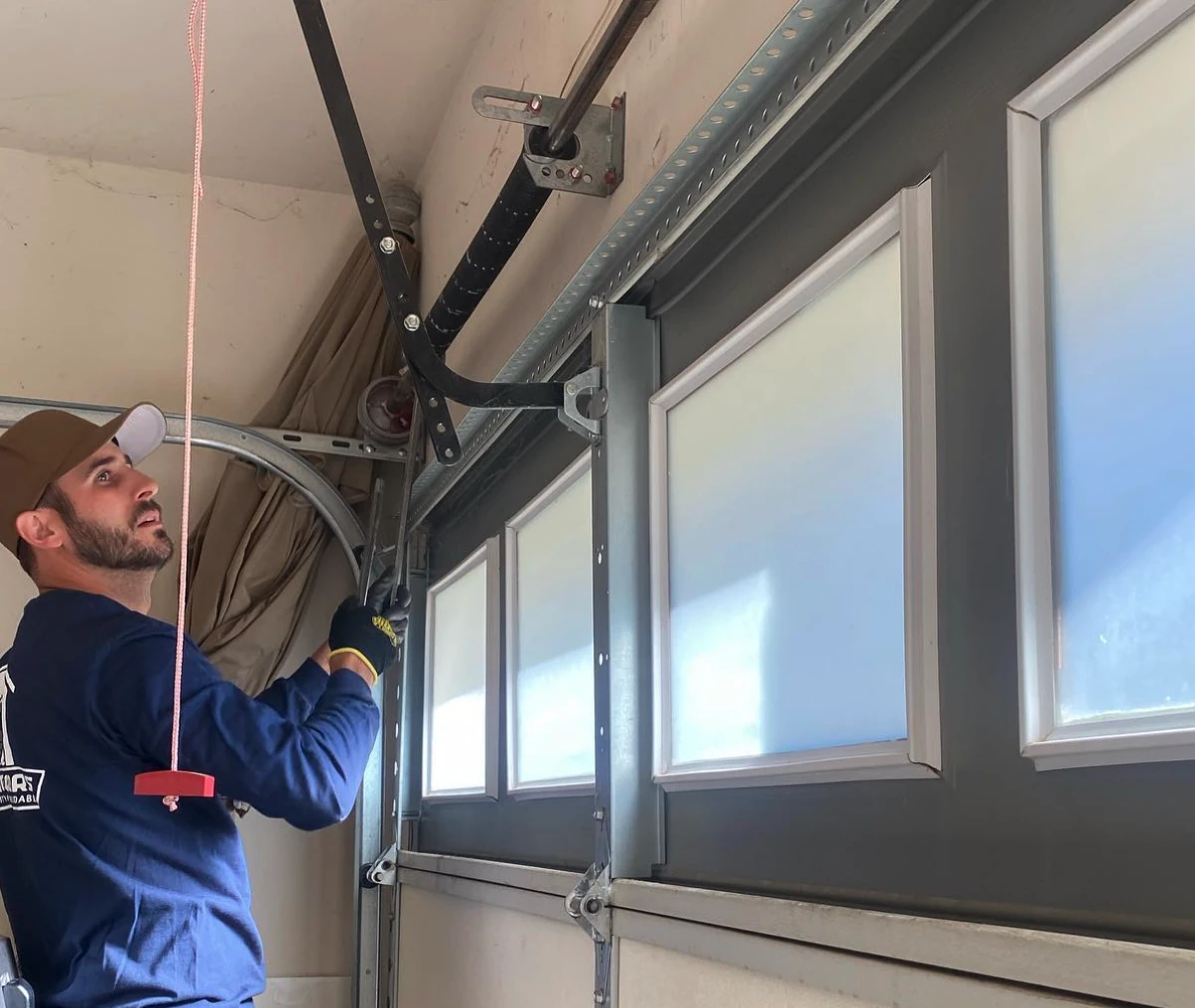
Replaced frayed cables and re-timed aluminum drums to achieve millimeter-perfect door leveling across the floor threshold.
Clear answers to critical questions regarding spring breaks, replacement procedures, and safety.
Garage door torsion springs are held under extreme rotational torque—typically between 200 and 400 foot-pounds of stored potential energy. When metal fatigue reaches the breaking point, that stored energy is released in milliseconds. The sudden shock wave reverberates through the steel shaft, garage door panels, and framing, producing a sound that frequently sounds like a gunshot or a vehicle hitting the garage.
No, never attempt to operate the opener with a broken spring. Electric openers are designed to guide a balanced door weighing roughly 10 to 15 pounds of effective mass. Without the spring's lifting force, the opener is forced to lift the entire 150 to 350-pound dead weight of the door. This will strip nylon drive gears, snap trolley assemblies, burn out the motor, or bend top panel sections.
If your garage door is equipped with two springs, both springs were installed at the same time and have completed the exact same number of cycles. When one spring breaks from fatigue, the second spring has experienced the identical amount of mechanical wear and is on the verge of breaking. Replacing both simultaneously guarantees balanced lifting force, prevents motor strain, and saves you the cost of a second repair service call.
Oil-tempered springs are standard carbon steel heat-treated with oil; they are economical but rust prematurely in Florida humidity. Powder-coated springs feature an electrostatically applied polymer coating that resists oxidation and eliminates black oil residue. Galvanized springs are hot-dip coated in zinc, offering the highest level of corrosion resistance for coastal barrier islands like Siesta Key and Longboat Key.
To test door balance, close the door completely, pull the manual emergency disconnect cord, and manually lift the door to waist height (about 3 to 4 feet). Release your hands. A properly balanced door will remain floating stationary in place. If it falls to the ground, the springs need more turns; if it pulls itself upward into the tracks, the springs are over-tensioned.
Standard 10,000-cycle springs last roughly 5 to 7 years in a home cycling 4 times per day. Upgrading to 25,000-cycle high-life springs extends that lifespan to 12 to 18 years under the same daily usage. With annual lubrication and inspection, high-cycle springs provide exceptional long-term reliability and lower lifetime ownership costs.
Quick Springs Garage provides complete residential and commercial overhead door solutions across Southwest Florida.
Leave your contact details and location so we can discuss your garage door and scheduling.