Vehicle Bumper Impact
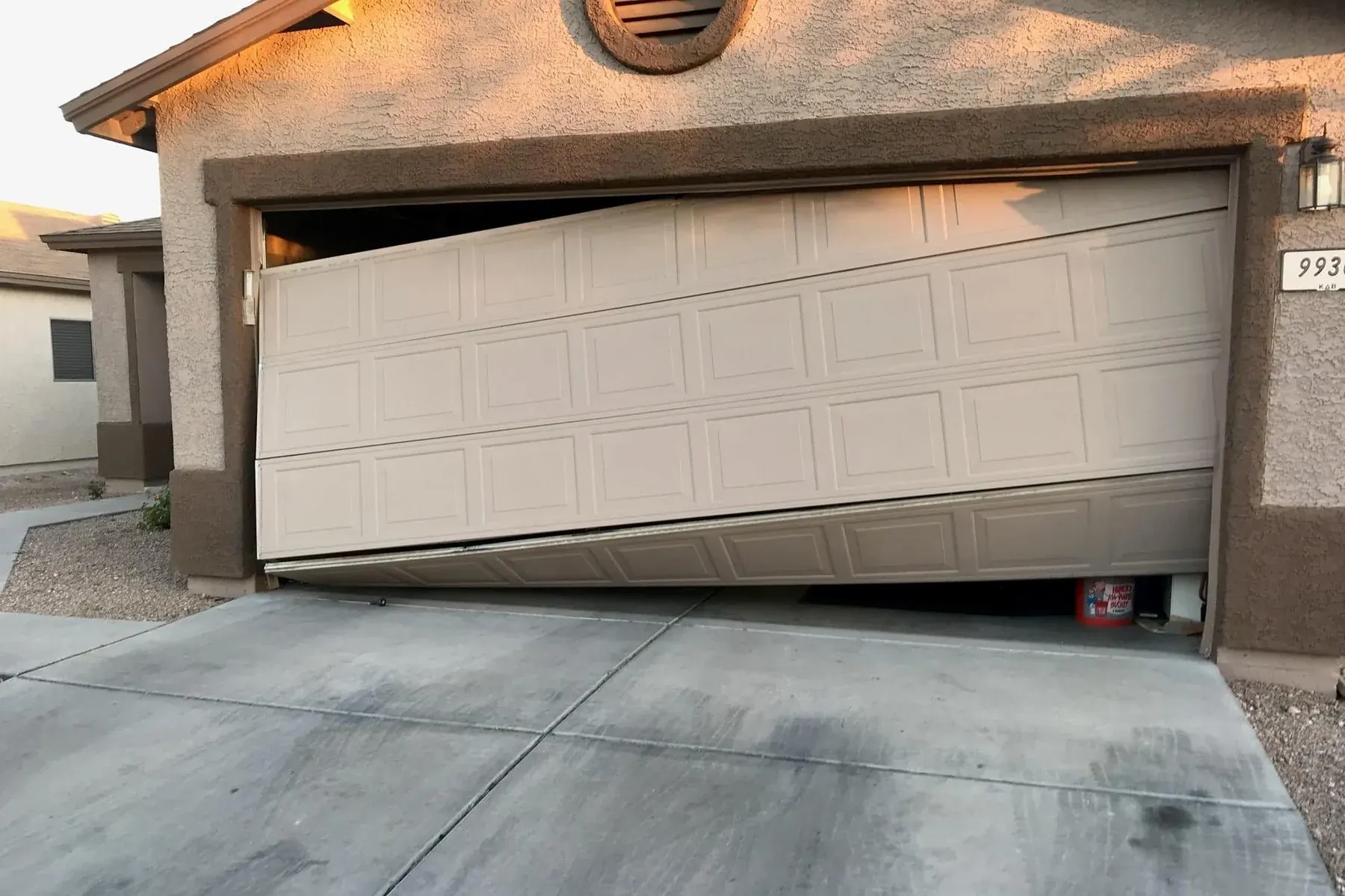
Accidentally backing into the bottom door section bends vertical tracks and shears roller stems. Even a minor bumper bump displaces track geometry enough to cause total derailment on the next cycle.
Impact damage repair →
A garage door that has jumped its tracks is in a precarious and extremely dangerous state of mechanical compromise. When heavy steel rollers dislodge from the vertical or curved horizontal track channels, hundreds of pounds of overhead door weight become unevenly suspended. In many cases, the door curtain hangs at a violent diagonal angle, jammed rigidly between the door jambs, while the torsion counterbalance springs and lift cables remain partially wound under intense energy.
At Quick Springs Garage, our certified technicians execute safe, systematic off-track recovery and structural realignment. We never force or hammer a misaligned door back into place, as doing so permanently creases panel sections, bends commercial track profiles, and can trigger sudden cable snap failures. Instead, we isolate spring tension, mechanically support the door curtain, reset dislodged rollers, laser-align track geometry, and re-torque all structural framing brackets.
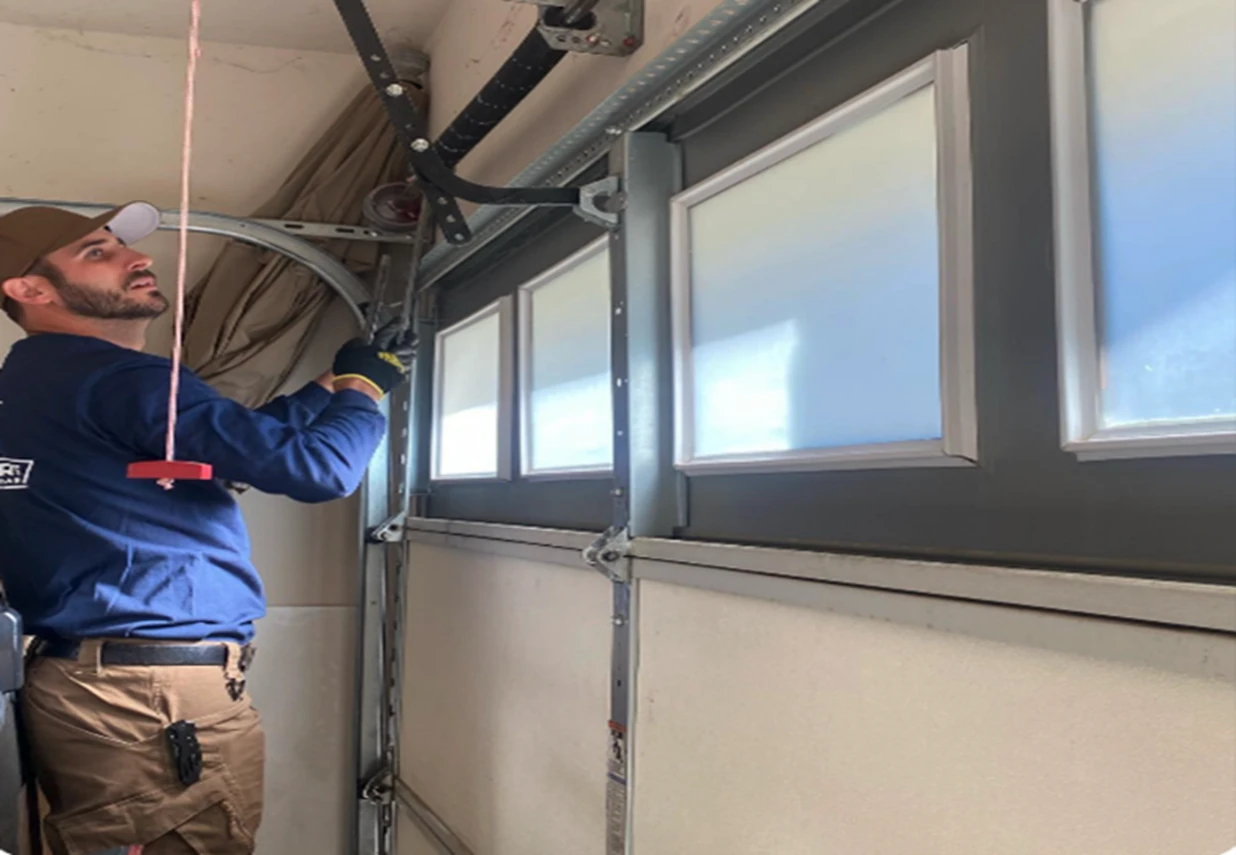
A residential sectional garage door travels within a precision-engineered steel track envelope consisting of vertical tracks, curved radius transition tracks (typically 12-inch or 15-inch radius), and horizontal ceiling tracks. For the door to glide smoothly without binding or rattling, these tracks must maintain exact parallel spacing across their entire length—typically maintaining a consistent 1/2-inch to 3/4-inch clearance between the door face and the jamb, and exactly 2 inches of spacing for standard roller stems.
When an overhead door jumps off track, it is almost never an isolated component failure; it is the visible consequence of a chain reaction within the electromechanical system. The most common catalyst is a snapped or thrown lift cable. When one cable snaps, the door curtain loses counterbalance support on that side. As the electric opener attempts to pull the door upward, the supported side lifts while the dead side drags, skewing the entire door diagonally. Within seconds, the steel rollers are pulled sideways out of their track channels under immense leverage. Read our detailed diagnostic guide on why garage doors come off track.
Another frequent cause is direct physical impact—such as a vehicle backing into the lower door section before the door has fully cleared the opening. Impact forces bend the vertical track channels, shear roller stems, and dislodge horizontal struts. Attempting to force an impacted or derailed door with the electric opener will strip motor gears, buckle additional panels, and snap the opposing cable. For safety guidance, consult our article on identifying and repairing misaligned garage door tracks.
In Southwest Florida's humid coastal climate, garage door hardware is subject to intense oxidation and corrosion. Standard factory-installed rollers frequently utilize unsealed steel ball bearings or cheap plastic sleeves without bearings. Over years of exposure to salty air and blown sand in Sarasota, Bradenton, and Venice, moisture penetrates the bearing races, washing away factory grease and causing the steel ball bearings to pit, rust, and seize solidly.
When a roller seizes, it ceases to roll and instead drags forcefully against the vertical track channel like a brake pad. This immense friction creates severe drag during travel. If the opener motor pulls past a seized roller, the roller stem can snap, or the sudden resistance can pop the roller head completely out of the track curve, derailing the entire panel section. Upgrading to sealed 13-ball bearing nylon rollers eliminates friction, runs whisper-quiet, and protects against coastal salt corrosion. Learn more about roller upgrades in our guide to diagnosing garage door roller popping noises.
Furthermore, in hurricane-prone Florida, compromised or misaligned tracks present a critical structural vulnerability. If a tropical storm strikes while your garage door track is loose, bent, or improperly anchored to the wall jambs, the high positive and negative wind pressures will easily pull the door curtain out of its tracks, breaching the home envelope and causing severe structural roof damage. Review storm preparation steps in fixing garage doors that rattle in high winds.
Understanding the mechanical catalysts that force rollers out of their guide channels.
Accidentally backing into the bottom door section bends vertical tracks and shears roller stems. Even a minor bumper bump displaces track geometry enough to cause total derailment on the next cycle.
Impact damage repair →When a cable snaps or jumps its drum groove, the door loses counterbalance tension on that side. The resulting diagonal tilt yanks rollers out of the tracks with violent lateral force.
Cable failure diagnostics →Corroded ball bearings lock up, dragging along the steel track until the roller head pops free or the shaft snaps at the hinge sleeve, leaving the panel unsupported.
Roller inspection guide →Daily operational vibrations gradually loosen lag screws anchoring vertical tracks to wood framing or masonry. The track bows outward under load, allowing rollers to slip out.
Track bracket tightening →If a door descends onto an obstruction such as a trash can, ladder, or vehicle hitch, one side stops while the other continues downward, creating sudden cable slack and drum derailment.
Resolving track scraping →When a spring snaps with a loud bang, the sudden shift in mechanical loads can cause the door to shudder violently and torque out of its vertical channels.
Torsion spring repair service →Executing a controlled, safe mechanical reset that restores structural integrity without damaging door panels.
Our technicians securely clamp the suspended door curtain using heavy-duty structural locking clamps on both tracks and mechanical support jacks beneath the sagging section. We disconnect the electric opener and inspect the torsion springs to safely neutralize any residual counterbalancing forces.
We evaluate damaged panel hinges, cracked roller stems, and cable tension. Starting from the lowest affected section, we carefully re-engage rollers into the track channels one section at a time, replacing any broken or fractured hardware with heavy-gauge galvanized components.
Using specialized hydraulic and mechanical track-straightening tools, we restore deformed track channels to their factory profile. We laser-plumb vertical tracks, set horizontal track pitch, and ensure exact 2-inch roller clearances along the entire travel path before torque-setting all jamb brackets.
We re-spool lift cables into their precision drum grooves, synchronize winding tension on both sides of the torsion shaft, and test manual door travel. Once smooth, balanced manual travel is verified, we reconnect the opener, calibrate travel limits, and perform multi-point safety reverse tests.
Review the operational and durability advantages of commercial-grade tracks and sealed nylon rollers.
| Component | Standard Builder Hardware | Quick Springs Commercial Grade | Performance Difference |
|---|---|---|---|
| Track Steel Gauge | Thin 18-Gauge Light Steel | Heavy-Duty 14-Gauge Galvanized Steel | Resists bending under wind load and accidental bumper impacts. |
| Track Radius Curve | Abrupt 10-Inch or 12-Inch Curve | Smooth 15-Inch Radius Curve | Significantly reduces stress on top rollers as panels transition to ceiling. |
| Roller Material | Unsealed Plastic or Raw Steel | 13-Ball Bearing Sealed Nylon Roller | 75% quieter operation; sealed against salt spray and dirt penetration. |
| Jamb Bracket Anchor | Single Stamped Wall Clip | Heavy-Duty Multi-Hole Structural Angle Bracket | Spreads mechanical loads over wider framing surface, preventing loosening. |
| Expected Service Life | 3 to 5 Years in Florida Humidity | 15 to 20+ Years with Basic Maintenance | Substantially lower risk of sudden catastrophic track derailment. |
When a garage door comes off its tracks, the most critical rule is: STOP OPERATING THE DOOR. Do not press the wall button, do not use the remote, and do not attempt to yank the red emergency release cord. Pulling the release cord while a door is crooked can cause the unsupported weight to suddenly crash down, crushing vehicles, property, or causing lethal personal injury.
Keep children, pets, and vehicles completely clear of the garage door opening. Do not attempt to hammer the track straight with a mallet or pry rollers into place with crowbars. Under high counterbalance tension, a slipping tool can release trapped spring energy with tremendous force. Review our safety procedures in garage door repair safety in Sarasota.
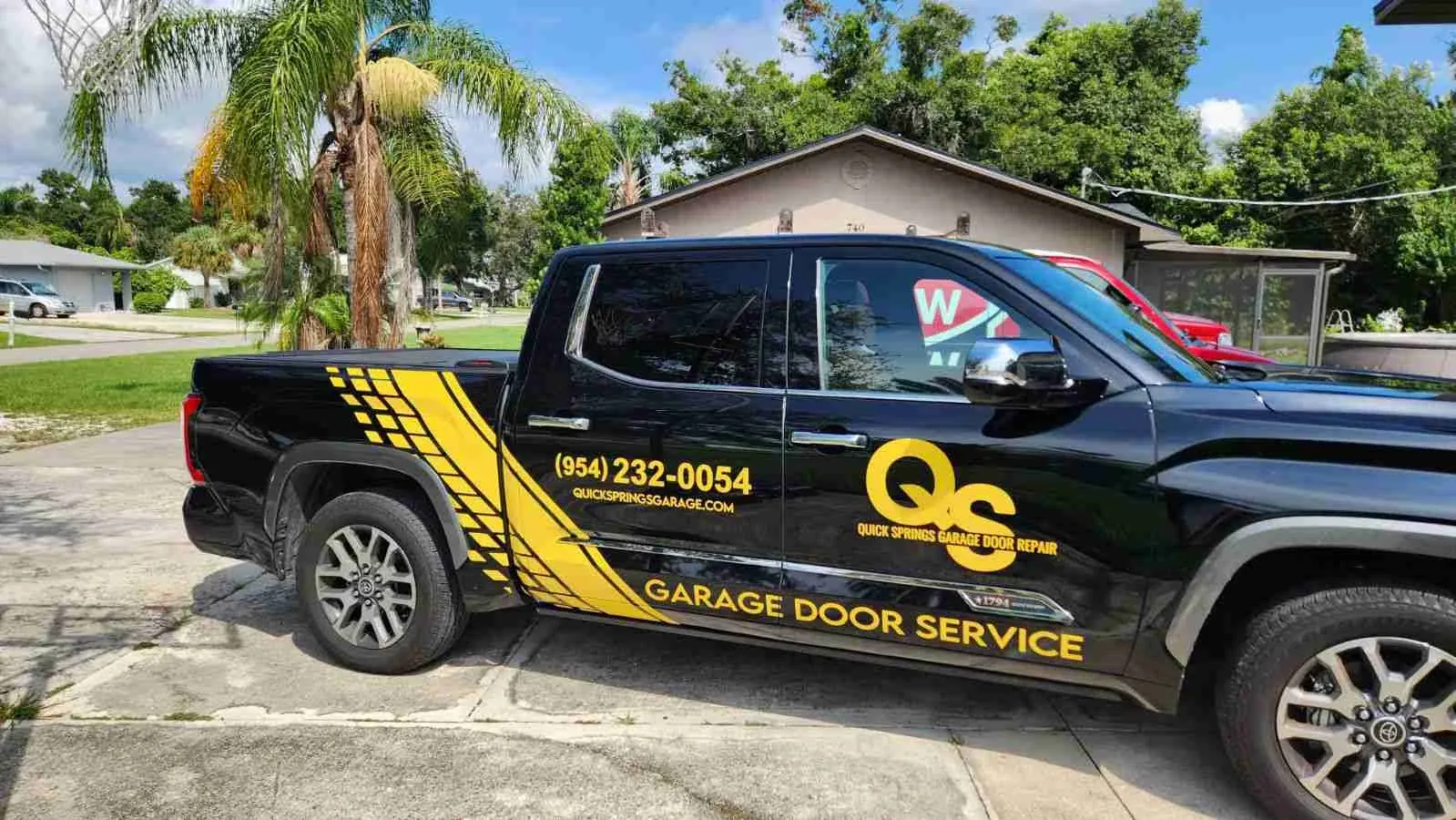
Quick Springs Garage provides dependable on-site service across Sarasota, Bradenton, Venice, and Lakewood Ranch. Our service vehicles arrive fully stocked with replacement tracks, heavy-duty rollers, lift cables, and structural brackets to resolve off-track door failures safely on the first visit. Check our advice on signs your door needs professional repair.
Field documentation of track straightening, structural resets, and nylon roller upgrades across Sarasota County.
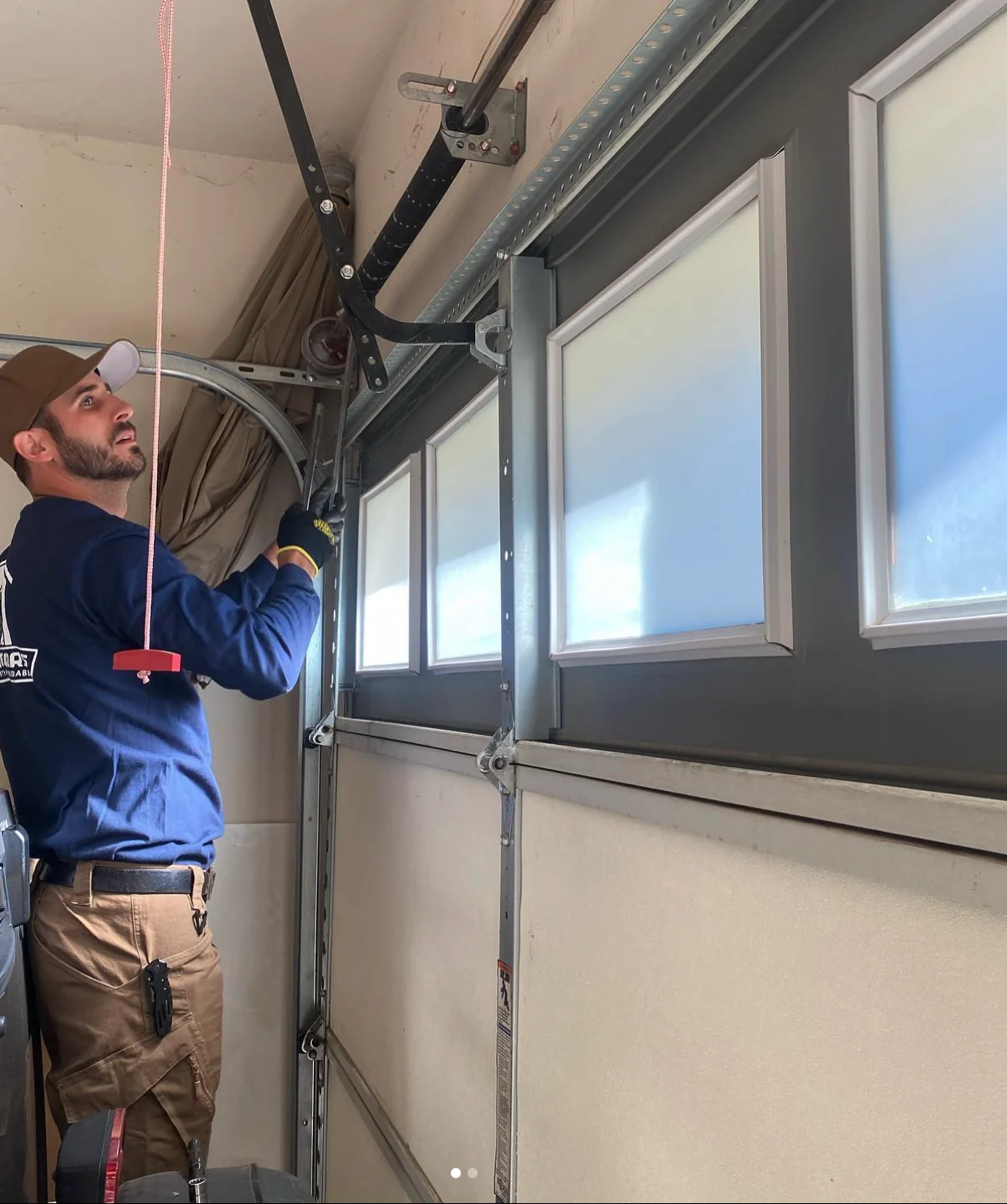
Secured a severely cocked door curtain, replaced 3 sheared rollers, and re-plumbed deformed vertical track channels.
Repaired vehicle-impacted bottom section, straightened lower track run, and re-synchronized torsion counterbalance.
Direct answers to homeowner questions about costs, causes, prevention, and safety risks of derailed doors.
No, you should never attempt to force or hammer an off-track garage door back into place. Overhead doors weigh hundreds of pounds and are connected to high-tension counterbalance springs. Attempting to pry rollers back into track channels without properly relieving spring tension can cause the door to crash down or cause the cables to snap, resulting in severe physical injury.
Do not operate the electric opener. Do not press the wall button or remote, and do not pull the red emergency release cord. Keep everyone away from the garage opening, as the door is in an unstable state and could fall. Call a certified garage door technician to safely secure the door weight and reset the tracks.
The most common non-impact cause is a snapped or thrown lift cable. When one cable snaps or jumps its drum groove, the door loses tension on that side, tilts diagonally, and pulls the rollers out of the vertical tracks. Other frequent causes include seized roller bearings, loose jamb brackets that allowed the tracks to spread apart, or the door closing down onto an obstacle.
Not always. If the track steel is only moderately bent or flared, our technicians can use specialized hydraulic and mechanical track-straightening tools to restore the original profile. However, if the track is creased, torn, or severely deformed from high-speed impact, replacing that track section is necessary to ensure smooth, safe roller travel.
An effective preventative measure is scheduling an annual 21-point tune-up and inspection. Routine maintenance ensures that track bolts remain tightly anchored to the framing, lift cables maintain equal tension, springs remain balanced, and rollers are lubricated or upgraded to sealed nylon bearings before they seize.
Most residential off-track repairs are completed within 1 to 2 hours. This includes securing the door, re-engaging or replacing dislodged rollers, laser-aligning the track channels, re-spooling and balancing the cables, and thoroughly testing travel limits and safety reverse functions.
Quick Springs Garage provides complete residential and commercial overhead door solutions across Southwest Florida.
Leave your contact details and location so we can discuss your garage door and scheduling.