
Serving Sarasota Service by appointment Available by phone every day
High-Tension Counterbalance Cable Service

Garage Door Cable Replacement in Sarasota, FL

Garage door lift cables are among the most heavily stressed mechanical components in your entire home. Manufactured from wound strands of high-tensile galvanized or stainless steel, these aircraft-grade cables transfer hundreds of foot-pounds of stored rotational energy from the overhead torsion springs directly to the bottom brackets of the door curtain. When a cable frays, corrodes, jumps its drum groove, or snaps completely, the door curtain loses mechanical balance, frequently becoming crooked, wedged inside the vertical tracks, or crashing down under uncontrolled gravitational force.

At Quick Springs Garage, we treat broken and frayed cables with the extreme technical precision and safety protocols they demand. Never attempt to adjust, loosen, or replace a garage door lift cable as a DIY project, the bottom bracket to which the cable is anchored remains under lethal spring tension even when the door appears static. Our trained technicians replace worn cables in matched pairs using heavy-duty 7x19 strand aircraft cables, re-spool cable drums, and re-balance the entire counterbalance assembly.

High-Tensile 7x19 Aircraft-Grade Wire Rope Always Replaced in Calibrated Matched Pairs Precision Drum Grooving & Shaft Alignment DASMA Standard Safety Locking Protocols
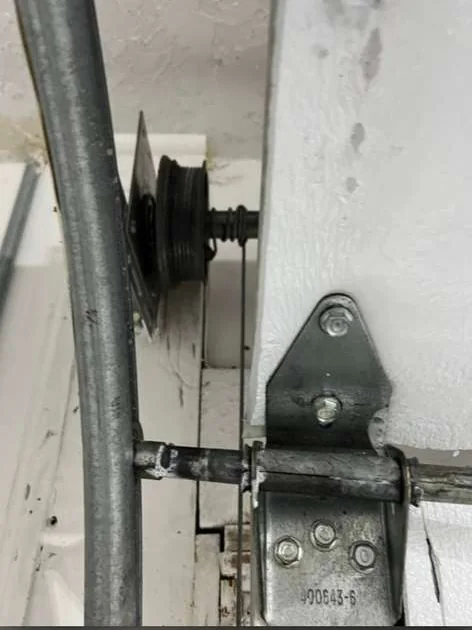
Garage door pulley, cable and roller hardware
Garage door equipment
Photo from the supplied Quick Springs gallery
Details →

Spring Tension Lockout

Systematic mechanical de-tensioning of torsion assemblies prior to cable bracket service.

7x19 Flexible Strand Core

Superior cycle fatigue resistance compared to stiff contractor-grade 7x7 cables.

Marine-Grade Alloys

Stainless steel cable options engineered specifically for coastal salt-mist environments.

Dual-Drum Synchronization

Millimeter-matched cable winding to eliminate door cocking, binding, and track friction.

Tensile Physics

The Mechanics of Garage Door Lift & Retention Cables

To appreciate why garage door cables fail, it is essential to understand the physics of the counterbalance system. A standard double-car insulated overhead door weighs between 180 and 350 pounds. This entire physical mass is supported not by the electric opener or the vertical tracks, but by two thin steel cables winding around aluminum grooved drums located at the outer ends of the torsion shaft. Each cable is subjected to continuous dynamic tensile loads that spike exponentially during the initial acceleration of an opening cycle.

Over thousands of operating cycles, the microscopic steel wires that make up each cable strand undergo mechanical work hardening. Every time the cable wraps around the tight radius of the aluminum drum, the metal flexes and stresses. Eventually, individual exterior wire filaments begin to snap, creating razor-sharp frayed 'birdcages' or whiskers. If ignored, the structural cross-section of the cable diminishes until the remaining wires can no longer support the tensile load, resulting in instantaneous snap failure. Learn more about the critical sequence of events in our article on what happens when a garage door cable snaps.

Another frequent mechanical failure mode is a 'thrown cable,' where the cable dislodges from the spiral grooves of the drum and wraps erratically around the torsion shaft. This occurs when the door curtain encounters an obstacle during descent, momentarily relieving cable tension and allowing slack wire to jump the drum flange. Once derailed, the uneven cable length pulls the door curtain cockeyed, wedging rollers tightly inside the vertical steel tracks. For complete system safety guidelines, review our broken garage door cable safety guide.

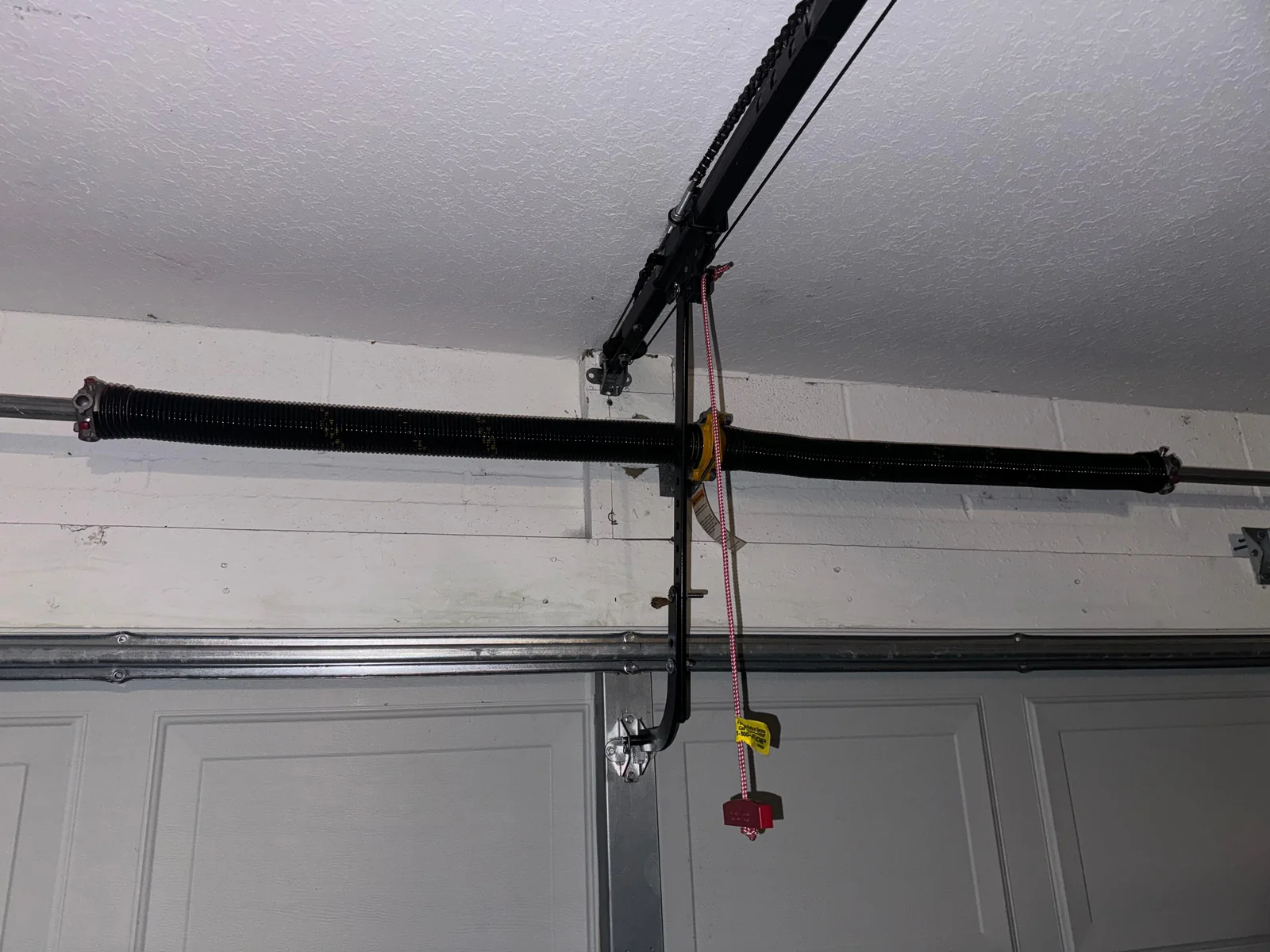
Torsion springs and shaft above a garage door
Torsion springs and shaft above a garage door. Photo from the supplied Quick Springs gallery.
Corrosion Chemistry

Salt Mist, Galvanic Rust & Bottom Bracket Failure

In Southwest Florida coastal environments, including Sarasota, Siesta Key, Bird Key, Anna Maria Island, and Venice, atmospheric salt deposition dramatically accelerates cable deterioration. High ambient relative humidity acts as an electrolyte, creating an aggressive galvanic corrosion cell between the steel cable and the zinc plating. Rust begins internally within the core strands where moisture becomes trapped, weakening the cable from the inside out long before severe decay is visible to an untrained eye.

The most dangerous point of corrosion occurs at the bottom corner bracket. Located mere inches above the concrete floor, this bracket is constantly exposed to rainwater runoff, lawn irrigation overspray, and corrosive salt brine brought in on vehicle tires. As the bottom bracket corrodes, the retaining button or crimped stop of the lift cable can pull completely through the bracket casting, violently releasing hundreds of pounds of spring energy.

For homes located within 5 miles of salt water, Quick Springs Garage recommends upgrading to 302/316 marine-grade stainless steel cables. Stainless steel alloys contain chromium and nickel, forming an impervious passive chromium oxide surface film that resists chloride pitting and stress corrosion cracking. To protect your entire hardware envelope, read our detailed recommendations in salt air garage door maintenance.

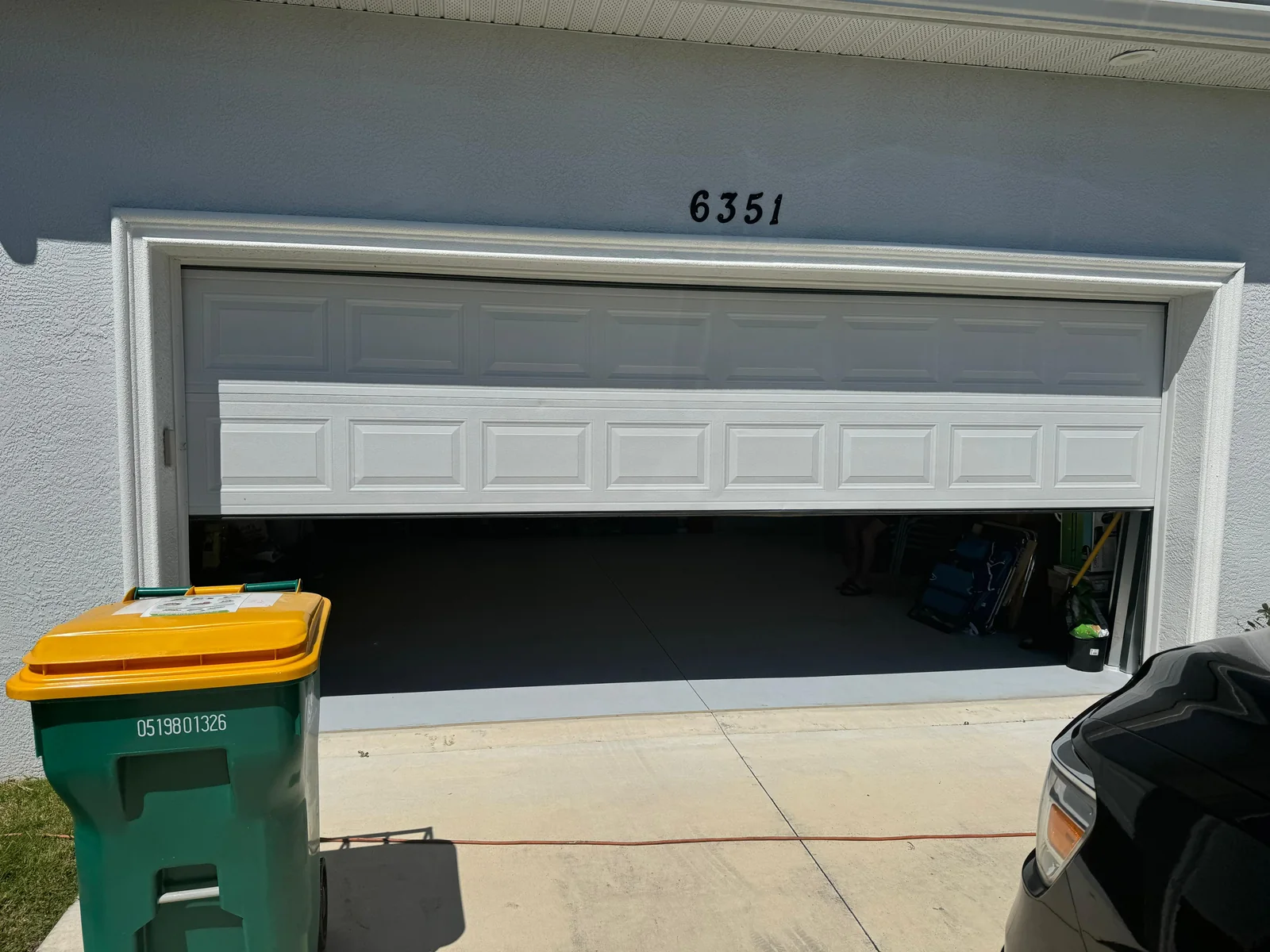
Garage door sitting crooked in its opening
Garage door sitting crooked in its opening. Photo from the supplied Quick Springs gallery.
Diagnostic Matrix

Warning Signs That Your Lift Cables Require Professional Service

Inspect your counterbalance cables regularly for these visible indicators of structural wear and fatigue.

Strand Fraying

Visible Whiskering or Birdcaging

If you observe tiny steel wires poking out from the cable surface, the rope has lost tensile capacity. Continuing to cycle a fraying cable will result in sudden snap failure during operation.

Cable safety inspection →
Drum Derailment

Cable Unspooled or Off the Drum

When a cable becomes slack and jumps outside the drum grooves, it tangles around the center shaft. The door will hang crooked and will bind violently if movement is forced.

Causes of drum derailment →
Structural Tilt

Uneven Gap Under Closed Door

If one corner of your door rests firmly on the concrete threshold while the opposite corner sits 1 to 3 inches higher, one cable has stretched, slipped on its drum, or lost tension.

Fixing uneven door gaps →
Severe Hazard

Loud Bang Followed by Stuck Door

A sudden loud metallic snap often indicates a snapped cable or broken torsion spring. Do not pull the red emergency release cord, as the unsupported door weight may crash downward.

Loud bang repair response →
Chemical Decay

Heavy Surface Rust Near Bottom Brackets

Flaking orange or brown rust near the floor brackets indicates deep chloride corrosion. The crimped end stop is at critical risk of pulling free from the cast bracket.

Managing coastal rust →
Mechanical Slack

Loose Cable Hanging Along Track

When the door is fully raised, lift cables should remain snug under slight residual tension. If a cable dangles loosely into the track, the torsion spring calibration is incorrect.

Track and cable dynamics →
Service Protocol

Our Precision Cable Replacement Protocol

Step-by-step mechanical engineering procedures executed to ensure balanced, safe, and durable operation.

01

Safety Lockout & Tension Relief

We secure the door curtain with heavy-duty locking pliers clamped to both vertical tracks to prevent unexpected door movement. Our technicians carefully inspect the torsion spring assembly, insert hardened steel winding bars into the winding cone, and systematically relieve spring tension to achieve a completely safe working environment.

02

Component Inspection & Drum Servicing

We examine the aluminum cable drums for cracked flanges, grooving burrs, and slipped set screws. Both drums are inspected to verify identical diameter and groove pitch. We evaluate the bottom corner brackets, replacing corroded stamped brackets with heavy-duty galvanized structural fixtures.

03

Installation of Matched 7x19 Cables

We never replace a single cable in isolation. Both cables are replaced simultaneously with matched-length 7x19 strand aircraft cables. We anchor the swaged stop sleeves securely into the bottom brackets, thread the cables through vertical track channels, and seat the upper stops precisely into the drum slots.

04

Drum Synchronization & Balance Calibration

Both cable drums are rotated until identical tension is established on both sides of the door curtain. Set screws are torqued to manufacturer specifications into the solid steel torsion tube. We re-wind the torsion springs to exact calculated turns, level the door across the threshold, and test manual and motorized travel.

Technical Specifications

Cable Engineering Specifications: Standard vs Aircraft Grade

Understanding wire construction, alloy compositions, and safety factors in overhead door counterbalance systems.

SpecificationContractor Grade CableQuick Springs Aircraft CableMarine-Grade Stainless Cable
Strand Construction7x7 (7 Strands of 7 Wires)7x19 (7 Strands of 19 Wires)7x19 High-Flexibility Strands
Flexibility & FatigueStiff: Prone to early strand fatigueHigh: Superior bending cycle lifeMaximum: Extreme resistance to cyclic work-hardening
Breaking Strength (1/8")Approx. 1,700 lbs tensile strengthApprox. 2,000 lbs tensile strengthApprox. 1,760 lbs tensile strength
Corrosion ResistanceBasic Commercial Zinc GalvanizationHeavy Hot-Dipped Galvanized Coating302/316 Marine Stainless Steel (Immune to Salt Spray)
Recommended SettingInland low-cycle applicationsStandard Sarasota residential doorsCoastal properties within 5 miles of Gulf or Bay waters
Severe Hazard Alert

Why Counterbalance Cables Must Never Be Serviced DIY

Every year, hospital emergency departments treat thousands of homeowners for serious injuries caused by DIY garage door repair attempts. Garage door lift cables are not passive cords; they are integral tensile links holding between 200 and 400 foot-pounds of stored kinetic energy generated by the torsion springs. Attempting to loosen the bolts holding the bottom corner bracket while the spring has tension will cause the bracket to violently shear off like shrapnel, causing severe lacerations, fractured bones, or worse.

Furthermore, without professional winding bars, drum set-screw torque specs, and precision leveling tools, DIY cable installations almost invariably result in uneven cable lengths. An uneven door binds diagonally in the tracks, bending track channels, shattering nylon rollers, and burning out opener drive motors. Read our guide on the real risks of DIY garage door repairs.

Quick Springs Garage technicians undergo comprehensive safety certification and carry specialized commercial containment tools, vice-locking systems, and high-tensile winding equipment. We resolve cable failures thoroughly, cleanly, and safely without endangering your home or family. Consult our advice on what to expect during a professional service visit.

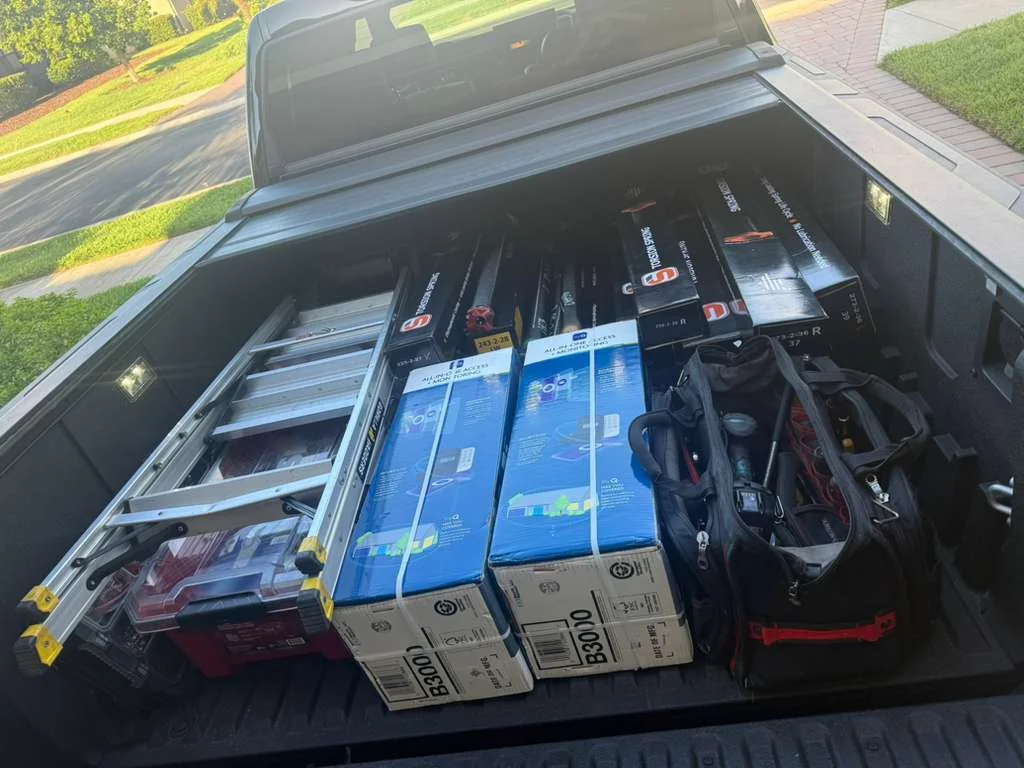
Service truck carrying garage door tools and packaged parts
Service truck carrying garage door tools and packaged parts. Photo from the supplied Quick Springs gallery.
Field Showcase

Garage door components and repair examples

Photos from the supplied Quick Springs gallery. No job date or neighborhood is claimed.

Expert Answers

Frequently Asked Questions About Cable Replacement

Clear answers to critical questions regarding cable failure causes, safety precautions, and service procedures.

Why do garage door cables have to be replaced in pairs if only one broke?

Cables must always be replaced in pairs because both cables experience identical cycle wear and fatigue. When one cable snaps, the surviving cable has undergone extreme stretching, dynamic shock loading, and mechanical stress. Replacing only one cable leads to uneven tension, causing the door to travel crookedly and bind. Installing a matched pair of identical-length cables ensures balanced, smooth operation.

Can I open my garage door manually if a cable has snapped?

No, never attempt to operate a garage door with a broken or derailed cable, whether by hand or using the electric opener. With one cable broken, the door lacks counterbalance on that side. Attempting to lift the door will pull it diagonally into the tracks, bending the track steel, shattering rollers, and risking sudden door collapse.

What causes garage door cables to jump off the drum?

Cables jump drums when tension is momentarily lost. Common causes include the door descending onto an obstacle (such as a trash can or car bumper), worn roller bearings that drag inside the tracks, or a broken torsion spring that suddenly releases tension. Once tension drops, the cable wire unseats from the spiral drum grooves and tangles around the shaft.

How long do garage door lift cables typically last in Florida?

Standard galvanized cables typically last 8 to 12 years in climate-controlled or inland environments, but in coastal Florida, humidity and salt air can degrade cables in as few as 5 to 7 years. Annual professional inspection and lubrication with specialized non-tacky corrosion inhibitors will significantly extend cable lifespan.

What is the difference between 7x7 and 7x19 cable construction?

7x7 cable consists of 7 strands of 7 individual wires (49 wires total). It is relatively stiff and prone to work-hardening fatigue over small drum radiuses. 7x19 cable consists of 7 strands of 19 individual wires (133 wires total). The thinner, more numerous wires make 7x19 aircraft cable substantially more flexible, durable, and resistant to cyclic bending fatigue.

How can I tell if my cables are beginning to fail before they snap?

Inspect your cables monthly for small fraying wires ('whiskers') protruding from the strand, localized kinks, flattening, or rust discoloration near the bottom brackets. Also observe the door as it closes: if one side hits the floor before the other, or if you hear ticking noises from the upper drums, schedule a professional inspection.

Talk through the problem

Request a Callback

Leave your contact details and location so we can discuss your garage door and scheduling.

Call: (954) 232-0054