
Single vs Double Garage Door Springs
Some doors use one torsion spring; others use a pair. The right choice follows door weight and design, not a preference for “more metal.”
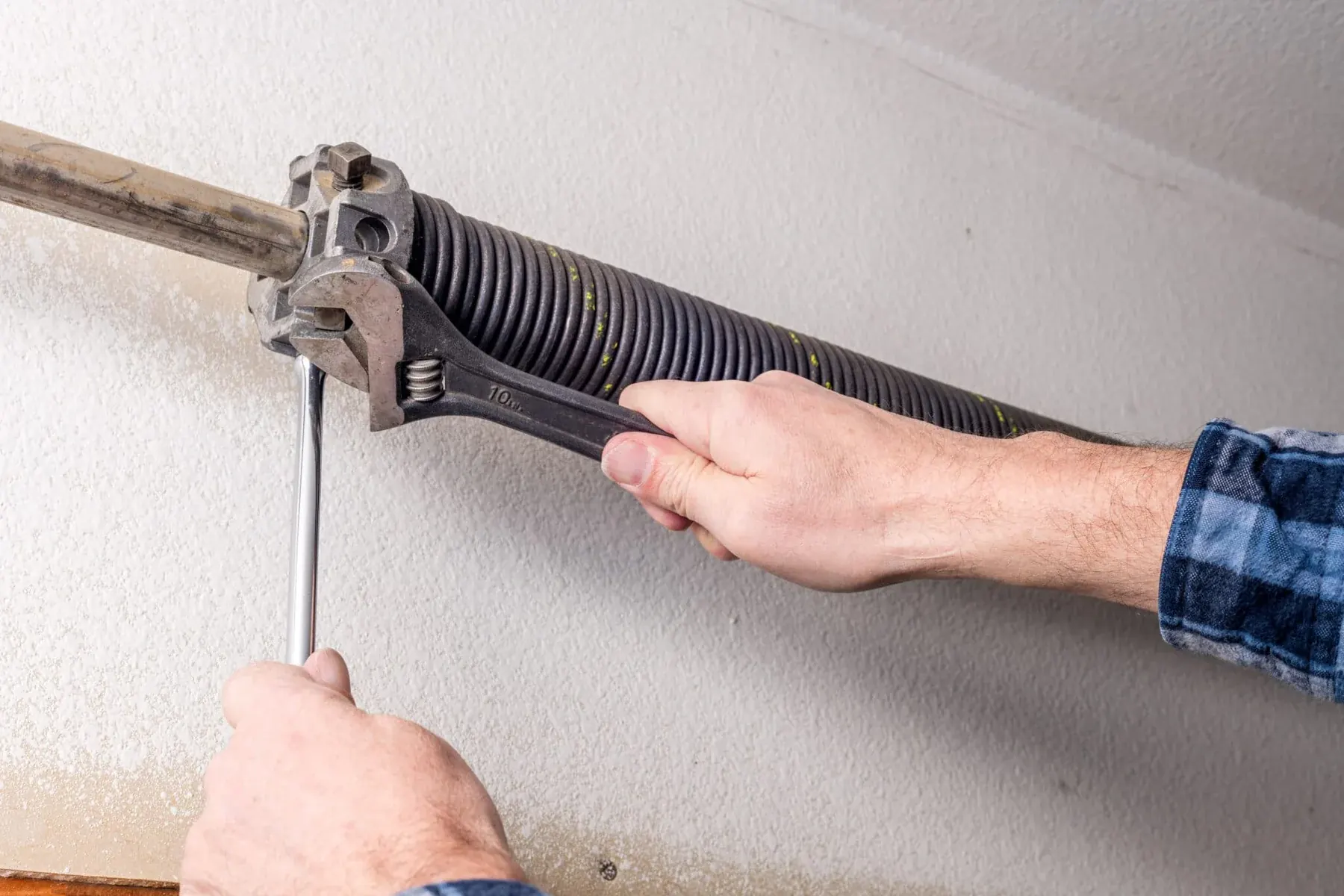
Why doors ship with one spring or two
Manufacturers specify spring count and wire size to counterbalance a given door. Lightweight single-car doors may use one properly sized torsion spring. Heavier doubles, insulated doors, and some custom units commonly use two springs sharing the load.
Swapping configurations without engineering the counterbalance correctly is unsafe. We match what the door requires.
Think of spring count as part of the door’s engineered counterbalance recipe. Changing ingredients without recalculating the recipe is how doors become dangerous. We stay inside proper design rather than improvising “stronger looking” hardware.
If you are shopping a new door, ask the installer how many springs the finished weight requires, do not assume every double-car opening automatically needs two.
Installation manuals and end-stile stamps sometimes hint at original spring design. When labels are gone, measurement of door weight and drum type guides a correct replacement specification.
How failures differ between setups
On a dual-spring door, one broken spring leaves partial assistance, still unsafe and hard to lift, but sometimes less dramatic than a total loss of counterbalance. On a single-spring door, a break typically dumps the full weight onto cables, bottom brackets, and anyone trying to force the door.
Either way, disconnect the opener from lifting duty and call for service. Guide: loud bang then stuck.
After a dual-spring break, some homeowners still lift the door a few inches and assume things are fine. Partial assistance is not safe assistance. Cables and bottom brackets can be carrying uneven loads that fail next.
Treat any spring break as an out-of-service event for automatic operation until a technician restores balance and tests travel.
Cable stretch after a spring break can leave the door crooked even once a new spring is on. That is why cable and drum inspection is part of spring service, not an unrelated upsell.
Wear sharing and cycle life considerations
Two springs can share load and may support longer service intervals when correctly specified, especially with higher cycle ratings. They do not eliminate Florida corrosion or poor maintenance.
When one spring on a pair fails, we discuss replacing both because they share age and cycles, see spring lifespan in Florida.
High-cycle dual systems on busy doors combine load sharing with longer ratings. That pairing is common in light commercial and high-use residential bays.
Maintenance still includes bearings, set screws, and cable drums. Spring count does not retire those inspections.
Lubrication reduces friction losses that steal cycle life, but it will not heal a spring already cracked at the coil. Know the difference when you hear friendly advice online.
Torsion pairs vs older extension spring systems
Some older doors use extension springs along the horizontal tracks instead of torsion springs above the opening. Those systems have different safety cable requirements and failure modes. This page focuses on torsion count; we still inspect whatever hardware your door actually has.
Never stretch, cut, or rehook extension springs without training. Energy storage is still dangerous.
Extension-spring doors deserve safety cables through the spring so a break does not allow a loose spring to become a projectile. If your older door lacks them, mention it during the visit, we will address safe remediation paths.
Converting extension to torsion is a larger project involving track and headroom design, not a casual weekend project.
Safety cables on extension systems should be anchored so a broken spring cannot fly into living space or across the garage. Missing safety cables are a priority finding.
When a configuration change is discussed
If you install a heavier insulated door, the spring system must be redesigned. High-cycle upgrades may change wire size and rating while keeping dual torsion layout. We do not “add a second spring” casually onto a door designed for one without proper calculation.
Commercial and high-use cases: high-cycle systems.
Documented redesigns happen when door weight changes: glass adds, insulation adds, or a lighter decorative door replaces a heavy insulated unit. Springs must follow the new weight down or up.
We refuse to “just tighten it more” as a substitute for correct spring specification.
Light commercial sectional doors on shops sometimes use dual torsion with high-cycle ratings, still a spring-count and rating conversation, still professional winding only.
Inspection and replacement with Quick Springs
We verify drum cables, center bearing, set screws, and opener force after spring work. Written estimates list spring configuration clearly so you know what is being matched.
Call (954) 232-0054 or book now. More spring topics sit in the springs guide hub.
Ask us to show you the spring configuration on the estimate line so invoices remain understandable for future service or home resale disclosures.
Sudden spring breaks: we are open 24 hours to secure the door and schedule proper spring replacement.
Ask for before/after balance notes on your invoice. Future technicians, and future you, benefit from knowing what configuration was installed.
Questions about this topic
Our Professional Service & Repair Standards
Safety first: keep people and pets clear of a moving door. Do not place bricks on remotes. If the door is off track, stop using the opener. If a cable is hanging, leave the door down if it is already closed. These habits prevent extra panel damage while you wait for a technician.
Common questions from property owners include how long a service visit takes, whether we service specific brands, and how our written estimates work. Service duration depends on site access and the specific repair needed. We service all major residential and commercial overhead door systems. Transparent estimates are provided directly after diagnosis, taking into account door weight, cycle ratings, and local environmental wear.
Helpful resources: use our request form to schedule service, view our contact page for shop location and hours, read about our team, or browse our blog guides. An educational guide never replaces an on-site diagnosis when the door is unsafe or under tension.
Garage door issues are much easier to diagnose when the entire door is evaluated as a unified system. Springs carry the counterbalance weight, cables and drums ensure level lifting, rollers and tracks guide smooth panel travel, and sensors and openers function reliably only when mechanical balance is restored. Quick Springs Garage Door Repair begins every service visit with a comprehensive inspection to ensure the true root cause is addressed.
Florida humidity, salt air, and afternoon storms change how hardware ages. Lubricant dries. Fasteners rust. Photo-eyes get dirty. A door that slams, reverses, or sits heavy is sending a mechanical signal, not a random glitch. We explain those signals in plain language before anyone approves parts.
When you request service, share the ZIP, whether the door is stuck open or closed, and any recent storm, power outage, or opener change. Gate codes and HOA notes help. We are licensed and insured, open 24 hours, and we provide a written estimate after diagnosis. Call (954) 232-0054 or use the request form.
Residential garage doors throughout Sarasota and surrounding communities often experience torsion spring failure over time. A loud bang accompanied by a door that will not lift manually signals a broken spring; never attempt to wind or replace springs without proper training and equipment. Commercial doors typically wear from heavy cycle volume, leading to flattened rollers, cable fray, and operator strain. In all cases, our technicians conduct complete post-repair safety testing including balance, travel limits, and auto-reverse functions.
Tune-ups catch dry rollers, loose track bolts, and early cable wear before they cause unexpected operational failures. Installation is discussed only when panels, rust-through, or repeated structural repairs make replacement the safer path. We do not invent awards or publish fake review counts. Our local shop is located at 2517 Sota St, Sarasota, FL 34240.
Opener motors that hum without lifting usually mean the door is too heavy because a spring lost tension. Replacing the opener first often wastes money. Off-track doors after impact need track, roller, and cable checks together. Sensor issues in bright sun are often alignment and dirt, not a new motor.
Property managers can list multiple openings on one request. Seasonal residents should mention months of idle time. After a storm, say whether the door still moves. Email [email protected] if you need to send photos of cables, springs, or the opener rail. Photos never replace an on-site look, but they help us plan.
Our service guides cover torsion spring repair, opener repair, off-track recovery, cable replacement, tune-ups, and installation. Our service-area guide lists the communities we support throughout Southwest Florida. If you would like to read public reviews, please visit our Google Maps profile linked in the footer.
During a visit we document findings, then you choose the work with zero high-pressure sales tactics. After approved repairs we test the door through full cycles. If a part is not on the truck, we explain timing clearly. We follow the same process across Sarasota County and nearby Southwest Florida communities.
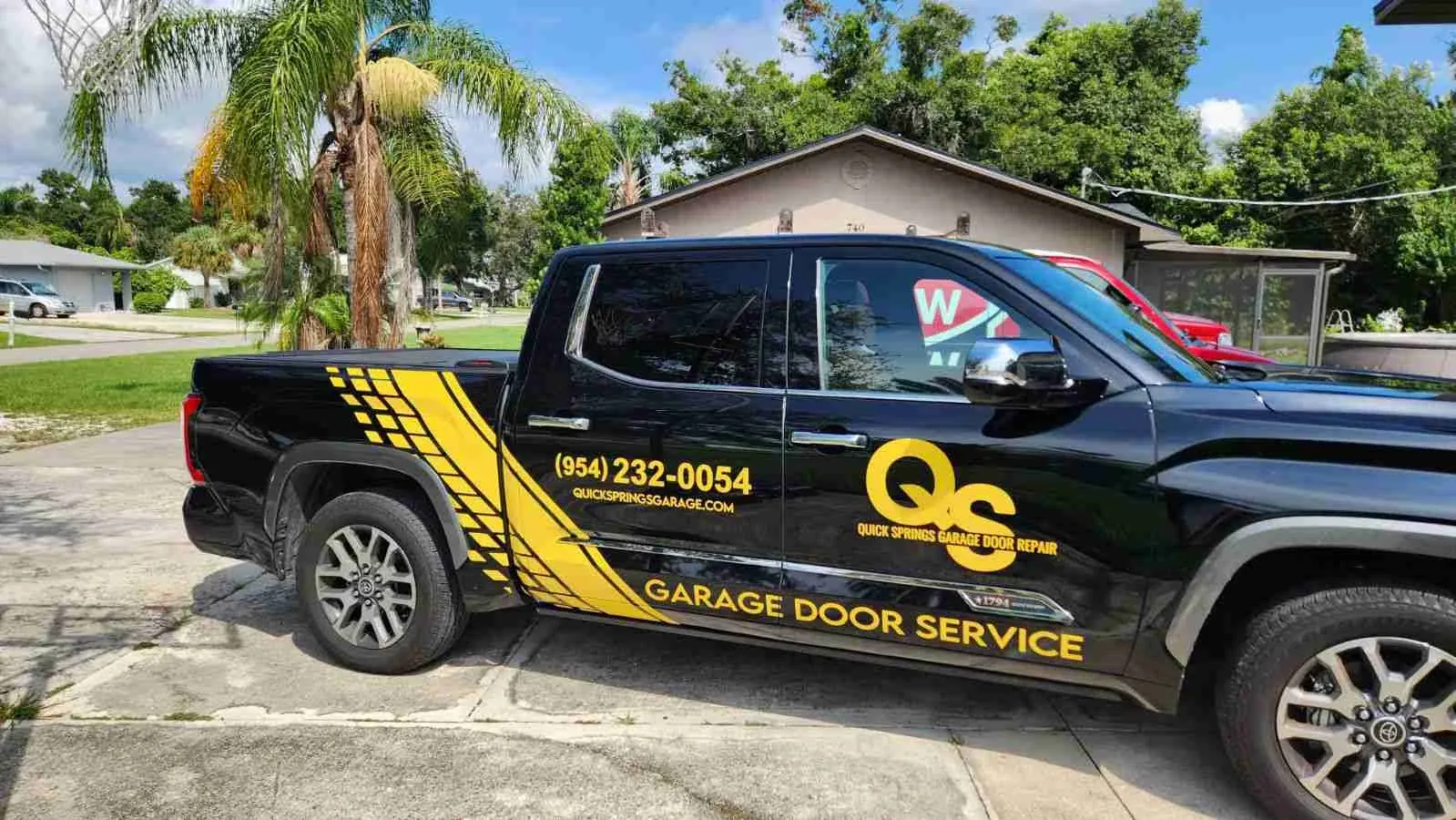
System checks on every visit
These six checks ensure every service visit addresses the underlying mechanics rather than just swapping individual parts.
Springs
Torsion springs lose cycles. A bang or a heavy door needs professional spring service, never DIY winding.
Cables
Frayed cables or a cable off the drum pull a door crooked. We inspect both sides with spring work.
Tracks
Impact and loose brackets bend tracks until the door binds. Forcing travel makes it worse.
Openers
Motors that hum without lifting often mean a balance problem, not only a failed gear.
Sensors
Misaligned photo-eyes reverse on close. We clean, align, and test after track work.
Maintenance
Tune-ups catch dry rollers and loose hardware before they become a stuck-door call.
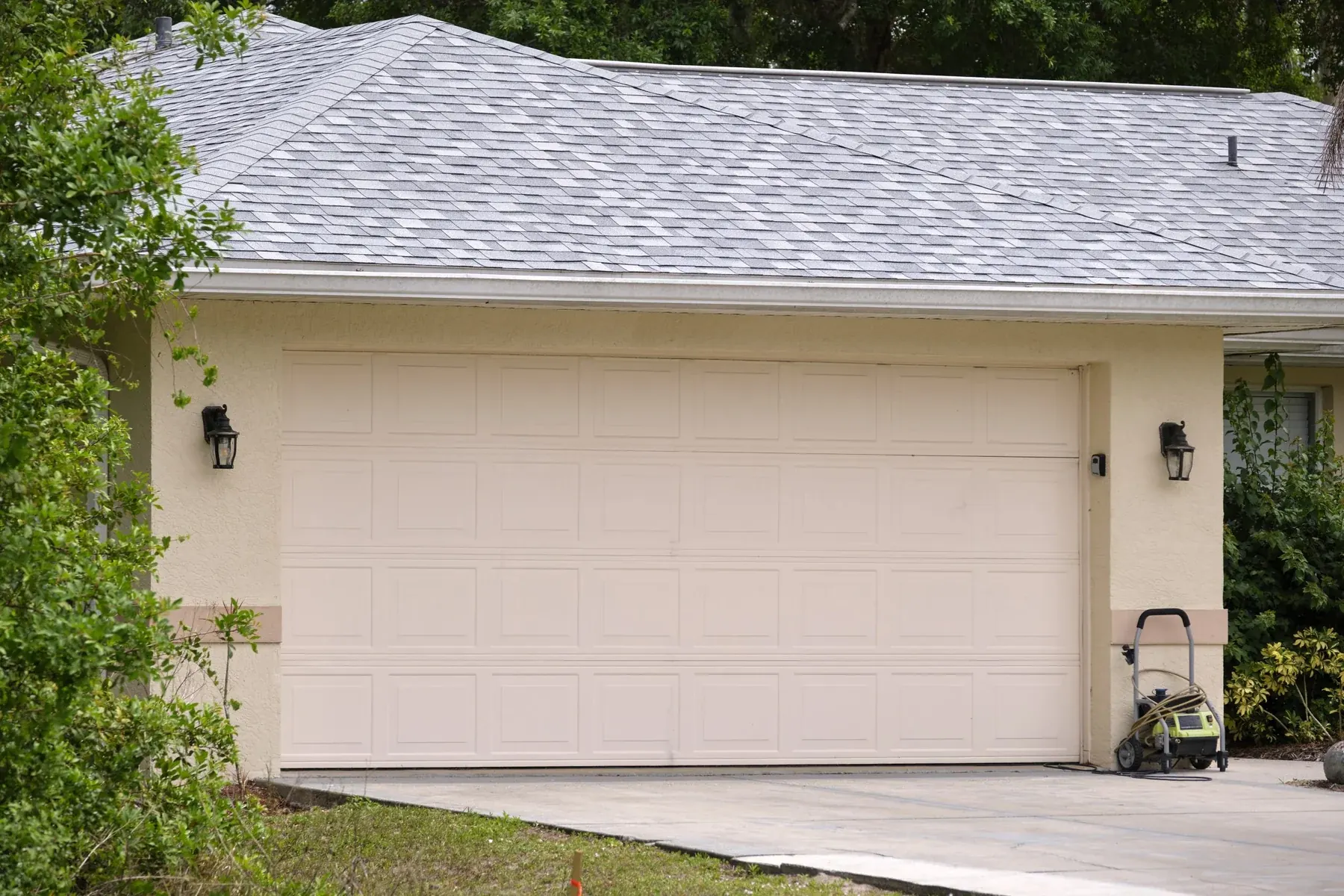
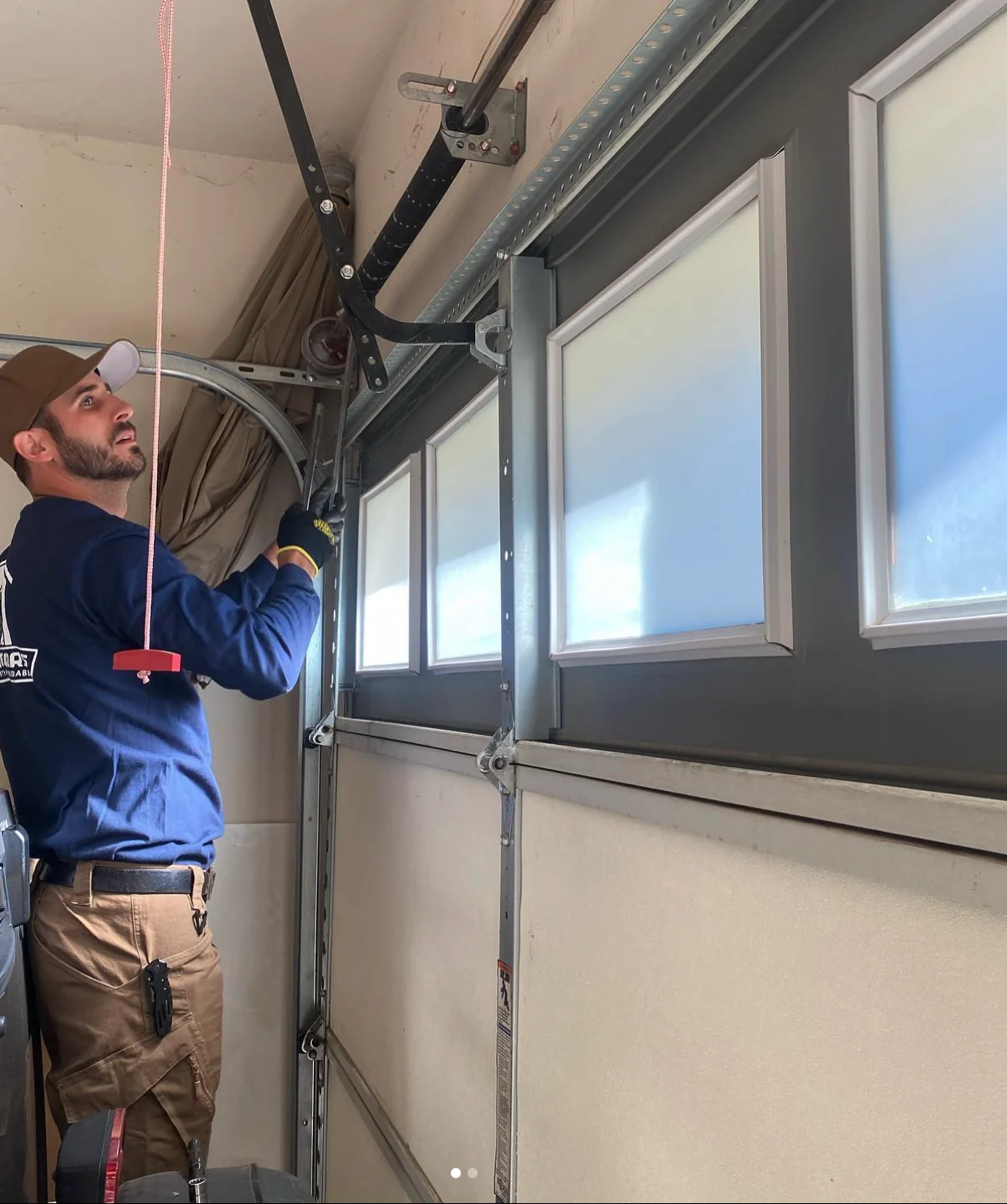
Photos from garage door work
Representative service photos. Your door may need a different mix of springs, cables, tracks, or opener work after inspection.
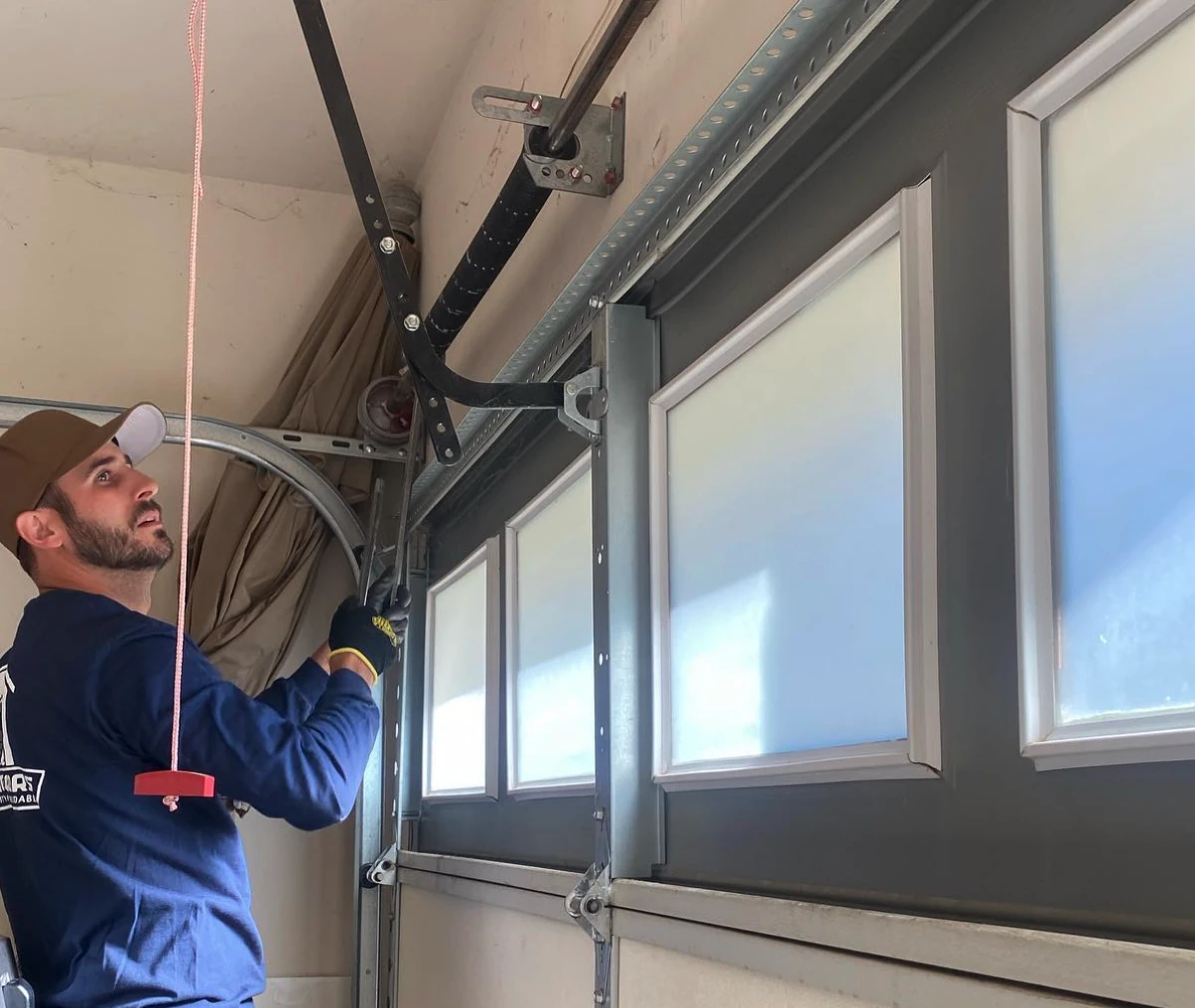
What a service visit looks like
Request with ZIP
Call (954) 232-0054 or use the form. Mention symptoms and whether the door still moves.
Inspect the system
Springs, cables, drums, rollers, tracks, photo-eyes, and the opener are checked together.
Written estimate
You see findings and options before repair work begins. No pressure to guess parts over the phone.
Repair and test
Approved work is completed, then we test balance, travel, and auto-reverse.