


Your garage door is more than just an entry point for your vehicles; it’s a barrier between your home and the outside world. As such, it’s exposed to a variety of weather conditions throughout the year, from scorching sun to freezing temperatures, rain, snow, and wind. Over time, these elements can take their toll, leading to drafts, water leaks, and increased energy costs. To weatherproof your garage door, you can extend its lifespan, improve your home’s insulation, and protect your valuable possessions stored inside.
Why Weatherproofing Matters
-
- Energy Efficiency: A properly weatherproofed garage door helps maintain a consistent temperature in your garage, reducing the strain on your home’s heating and cooling systems.
-
- Protection from the Elements: Weatherproofing prevents water, snow, and debris from entering your garage, safeguarding your belongings and the garage’s interior structure.
-
- Noise Reduction: A well-sealed garage door can significantly reduce outside noise, creating a more peaceful environment.
-
- Pest Prevention: Sealing gaps and cracks in your garage door helps keep out unwanted pests and critters.
Steps to Weatherproof Your Garage Door
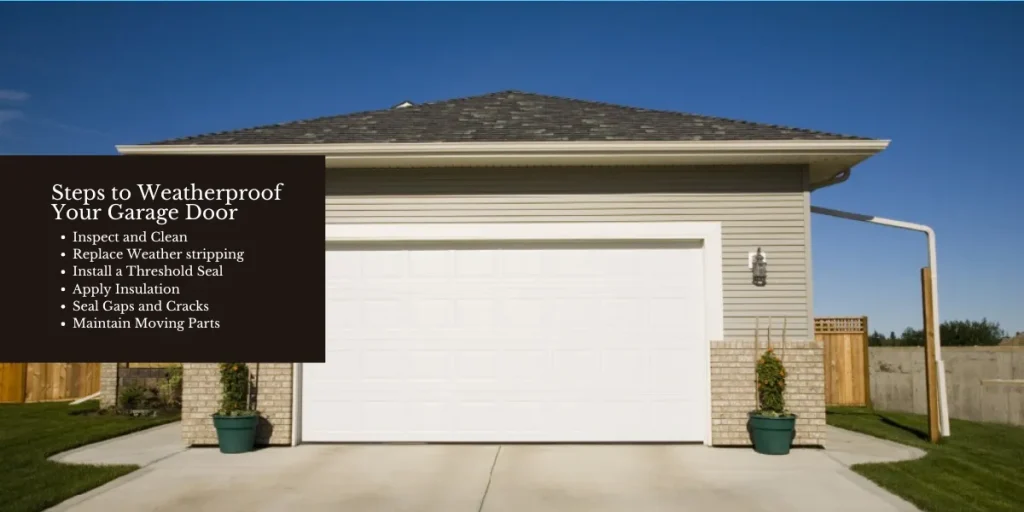
Inspect and Clean
Begin by thoroughly inspecting your garage door for any signs of damage, wear, or gaps. Clean the door and its surrounding areas to ensure proper adhesion of weatherproofing materials to weatherproof your garage door.
Replace Weatherstripping
Weatherstripping is crucial for sealing the gaps around your garage door. Replace old or damaged weatherstripping with new, high-quality materials designed to withstand various weather conditions.
Install a Threshold Seal
A threshold seal at the bottom of your garage door prevents water, debris, and pests from entering. Choose a durable rubber or vinyl seal that can withstand frequent use.
Apply Insulation
Insulating your garage door improves temperature regulation and energy efficiency. Use foam board insulation or a garage door insulation kit for best results.
Seal Gaps and Cracks
Use caulk or weatherproof sealant to fill any gaps or cracks in the garage door frame and surrounding walls.
Maintain Moving Parts
Lubricate hinges, rollers, and other moving parts to ensure smooth operation and prevent wear that could compromise the door’s weatherproofing.
Consider a New Coat of Paint
A fresh coat of exterior-grade paint can provide an additional layer of protection against the elements.
Sealing Gaps and Cracks:
Weatherproof your garage door by Inspecting your garage door thoroughly for any visible gaps or cracks. Pay special attention to the bottom, sides, and top of the door.
Use a high-quality silicone-based caulk to seal small cracks and gaps around the door frame. For larger gaps, consider using expanding foam sealant.
Install or replace the bottom seal (also called a door sweep) to create a tight barrier between the door and the ground. Choose a durable rubber or vinyl seal that can withstand frequent use.
Add weatherstripping along the sides and top of the door. Look for adhesive-backed foam or rubber strips that can be easily cut to size and applied.
Recommended Weatherproofing Products:
-
- Silicone-based caulk for small gaps and cracks
-
- Expanding foam sealant for larger openings
-
- Rubber or vinyl garage door bottom seal
-
- Adhesive-backed foam or rubber weatherstripping for sides and top
-
- Weatherproof your Garage door threshold seal for added protection at the bottom
Common Mistakes to Avoid:
-
- Using the wrong type of sealant that isn’t suitable for exterior use or can’t withstand temperature fluctuations
-
- Failing to clean and dry surfaces before applying weatherproofing materials
-
- Not measuring accurately, resulting in ill-fitting seals or weatherstripping
-
- Overlooking the importance of proper garage door alignment and adjustment
-
- Applying too much sealant, which can interfere with the door’s operation
Reapplication Frequency:
The frequency of reapplying weatherproofing treatments depends on various factors such as climate, usage, and the quality of materials used. However, as a general guideline:
-
- Inspect your garage door’s weatherproofing at least twice a year, ideally in spring and fall.
-
- Replace the bottom seal every 2-3 years or sooner if you notice signs of wear or damage.
-
- Check and replace side and top weatherstripping every 3-5 years.
-
- Reapply caulk or sealant as needed, typically every 2-3 years or when you notice gaps forming.
Summary
Weatherproofing your garage door is a worthwhile investment that pays off in energy savings, improved durability, and better protection for your belongings. By following these steps—inspecting and cleaning, replacing weatherstripping, installing a threshold seal, applying insulation, sealing gaps, maintaining moving parts, and considering a new paint job—you can significantly enhance your garage door’s ability to withstand various weather conditions. Regular maintenance and timely repairs will ensure your garage door continues to provide optimal protection for years to come.
