


Properly aligned garage door sensors are crucial for the safety and functionality of your garage door system. Misaligned sensors can cause your door to malfunction, potentially leading to accidents or damage. This guide will walk you through the process of how to align garage door sensors, ensuring your system operates smoothly and safely.
Understanding Garage Door Sensors
Garage door sensors are safety devices installed near the bottom of your garage door tracks. They use an invisible infrared beam to detect obstacles in the door’s path, preventing it from closing if something is in the way. When these sensors are misaligned, your garage door may refuse to close or reverse unexpectedly.
Signs of Misaligned Sensors
Common indicators of misaligned sensors include:
- The garage door refuses to close
- The door starts to close but immediately reverses
- Flashing lights on the garage door opener
- Inconsistent operation of the door
Steps on How to Align Garage Door Sensors

1. Ensure Safety First
Before beginning any work, disconnect the power to your garage door opener. This precaution prevents accidental activation of the door while you’re working on the sensors.
2. Locate and Inspect the Sensors
Find the sensors on both sides of your garage door, typically mounted about 6 inches above the ground. Check for any visible damage or obstructions, and clean the sensor lenses with a soft cloth to remove any dirt or debris.
3. Loosen the Sensors
Using a screwdriver or wrench, slightly loosen the mounting brackets holding the sensors. Don’t remove them entirely; just loosen them enough to allow for adjustment.
4. Align the Sensors
Carefully adjust the position of each sensor so they directly face each other. Use a measuring tape to ensure they’re at the same height on both sides, typically no more than 6 inches from the ground.
5. Check for Level
Use a level to ensure each sensor is perfectly vertical. An unlevel sensor may emit a beam that doesn’t align with its counterpart across the door.
6. Secure the Sensors
Once you’ve achieved proper alignment, tighten the mounting brackets to secure the sensors in place. Be careful not to shift their position while tightening.
7. Test the Alignment
Reconnect power to your garage door opener and test the sensors by attempting to close the door. If it closes smoothly, your alignment is likely correct. For a thorough test, place an object in the door’s path to ensure the sensors detect it and reverse the door’s motion.
Troubleshooting Tips
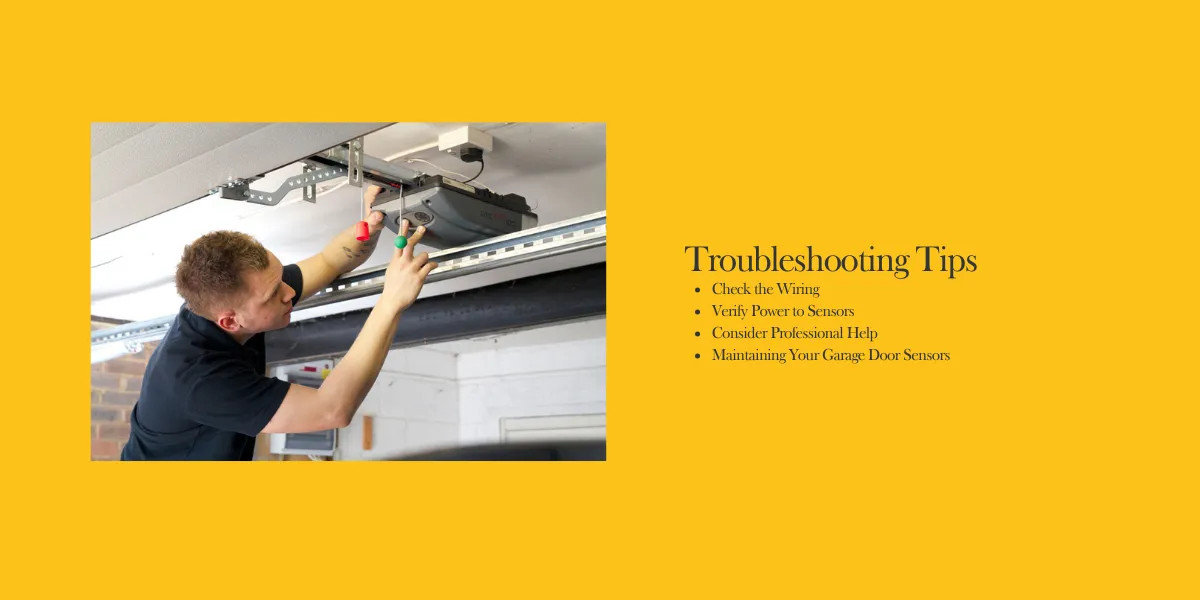
If you’re still experiencing issues after aligning the sensors, consider these additional steps:
Check the Wiring
Inspect the wires connecting the sensors to the opener for any signs of damage or loose connections.
Verify Power to Sensors
Most sensors have indicator lights. If these aren’t illuminated, there may be a power issue.
Consider Professional Help
If you’ve followed these steps and are still having problems, it may be time to consult a professional garage door technician.
Maintaining Your Garage Door Sensors
Regular maintenance can prevent future alignment issues:
- Clean the sensor lenses monthly
- Check for loose mounting brackets periodically
- Keep the area around the sensors clear of obstructions
How often should I check and clean my garage door sensors?
Maintaining your garage door sensors and how to align garage door sensors is crucial for ensuring the safety and proper functioning of your garage door system. Regular checks and cleaning of these sensors can prevent malfunctions and potential accidents. Here’s a comprehensive guide on how often you should check and clean your garage door sensors.

Monthly Checks
It’s recommended to perform a basic inspection of your garage door sensors at least once a month. This frequent check allows you to catch any potential issues early and maintain optimal performance of your garage door system.
During your monthly inspection:
- Visually examine the sensors for any obvious signs of damage or misalignment
- Test the sensors’ functionality by interrupting the infrared beam
- Ensure the area around the sensors is clear of any obstructions
Quarterly Cleaning
While monthly checks are important, a more thorough cleaning of your garage door sensors should be done every three months. This quarterly cleaning helps prevent the buildup of dirt, dust, and debris that can interfere with the sensors’ operation.
Cleaning Process
When performing your quarterly cleaning:
- Turn off the power to your garage door opener for safety
- Use a soft, dry cloth to gently wipe the sensor lenses
- For stubborn dirt, slightly dampen the cloth with a mild cleaning solution
- Clean the surrounding areas to prevent debris from accumulating
- Ensure the sensors are completely dry before restoring power
Annual Professional Inspection
In addition to your regular checks and cleaning, it’s advisable to have a professional garage door technician inspect your entire system, including the sensors, once a year. This annual checkup can identify and address any issues that may not be apparent during your routine maintenance.
Factors Affecting Cleaning Frequency
While the quarterly cleaning schedule is a good general rule, certain factors may necessitate more frequent cleaning:

Environmental Conditions
If you live in an area with high levels of dust, pollen, or other airborne particles, you may need to clean your sensors more often.
Seasonal Changes
During seasons with increased debris, such as fall when leaves are falling, you might need to clean the sensors more frequently.
Usage Frequency
Garages that see heavy use may require more frequent sensor cleaning due to increased exposure to dust and exhaust fumes.
Signs That Indicate Immediate Attention
While adhering to a regular maintenance schedule is important, there are signs that your sensors may need immediate attention:
- The garage door refuses to close or reverses unexpectedly
- The sensor lights are blinking or not illuminated
- You notice visible damage or misalignment of the sensors
If you observe any of these signs, perform a cleaning and check immediately, regardless of your regular schedule and get details on how to align garage door sensors.
Can misaligned garage door sensors cause damage to the door or opener?
Misaligned garage door sensors can indeed cause damage to both the door and the opener if left unaddressed. This issue goes beyond mere inconvenience and can lead to several potential problems that affect the functionality and longevity of your garage door system.

Damage to the Garage Door
When sensors are misaligned, the garage door may not operate as intended, which can result in:
Uneven Closing: The door might close unevenly, putting stress on one side more than the other. This can lead to:
- Warping of the door panels
- Damage to the hinges and rollers
- Misalignment of the entire door structure
Sudden Reversals: If the sensors falsely detect an obstruction, the door may reverse suddenly, causing:
- Strain on the door’s springs and cables
- Potential damage to the door panels from abrupt movements
Impact on the Garage Door Opener
Misaligned sensors can also affect the opener mechanism:
Motor Strain: The opener motor may experience increased wear and tear due to:
- Frequent attempts to close a door that keeps reversing
- Working harder to move a door that has become misaligned
Gear and Chain Stress: The constant starting and stopping can lead to:
- Premature wear on gears within the opener
- Increased tension on the drive chain or belt
Secondary Effects
Beyond direct physical damage, misaligned sensors can cause:
Safety Concerns
The primary function of these sensors is safety. Misalignment can compromise this, potentially leading to:
- The door failing to stop when an obstruction is present
- Increased risk of injury or property damage
Energy Inefficiency
A door that doesn’t close properly can result in:
- Increased energy costs due to heat or cool air escaping
- Potential damage to items stored in the garage due to exposure to outside elements
Long-Term Consequences
If left unchecked, misaligned sensors can lead to:
Shortened Lifespan: Both the door and opener may need to be replaced sooner than their expected lifespan due to accumulated damage.
Costly Repairs: What starts as a simple sensor issue can escalate into more complex and expensive repairs involving multiple components of the garage door system.
Prevention and Maintenance
To avoid these issues:
- Regularly inspect and clean the sensors
- Check for proper alignment at least once a month
- Respond promptly to any signs of misalignment or malfunction
Conclusion
Aligning garage door sensors is a manageable task for most homeowners. By following these steps, you can ensure your garage door operates safely and efficiently. Remember, if you’re ever unsure or uncomfortable performing these adjustments, don’t hesitate to seek professional assistance.
